Ibanez RG8 8-String Electric Guitar
As an Amazon Associate I earn from qualifying purchases.
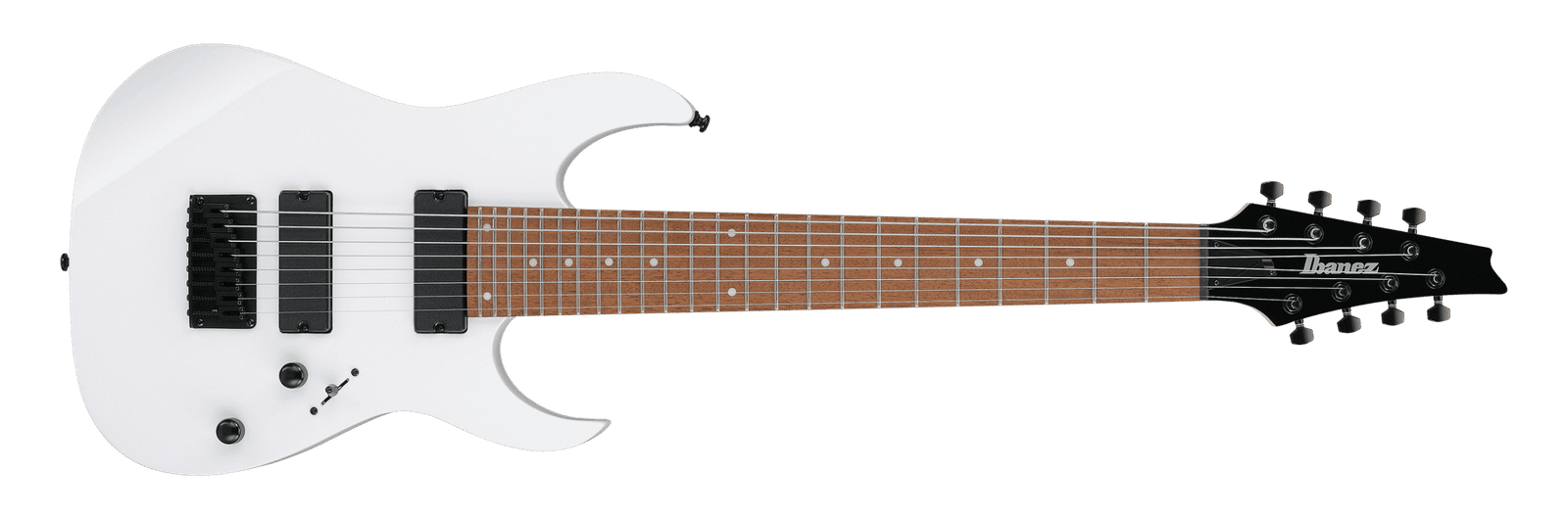
The white Ibanez RG8 gives you two extra strings below the usual six-string range. That opens up low riffs and chord voicings you can reach without giving up the upper strings. The trade-off is a wider neck, a longer scale and two more strings to keep quiet when they aren’t part of the riff. If you already have music in mind that needs those lower notes, the RG8 is worth a closer look. If you’re curious about eight strings, start by thinking about how often you’d put them to work.
What You Should Know Before Buying
The neck is 55 mm wide at the nut. That extra width is noticeable when you have to reach across the neck to fret or mute a low string. A familiar power chord on the upper six strings may still sit under your fingers, but the physical edge of the fretboard is now farther away. If you often wrap your thumb over the neck, try that grip on a comparable eight-string if you can. Also check how easily your picking hand moves from a low-string riff to a chord on the upper strings without catching a string on the way.
Ibanez uses a 27-inch scale across all eight strings. The longer scale helps keep the low strings under tension, but it also increases the distance between frets. Stretches in the first few positions can feel more demanding if you usually play a shorter-scale guitar. At the same pitch and string gauge, the longer scale also means more tension. If you do a lot of wide bends, consider how you want the upper strings to feel as well as how firm you want the low ones. The RG8 gives all eight strings the same scale length, so that balance comes down to tuning, string gauges and setup.
Check the tuning before ordering strings or following a lesson. Ibanez lists the factory tuning as F, B-flat, E-flat, A-flat, D-flat, G-flat, B-flat and E-flat, from lowest to highest. That’s a half step below F-sharp eight-string standard. If a tutorial assumes standard tuning, the same fret shapes will sound a half step lower on the factory setup. A change in tuning or string gauge can call for a setup check. Pay attention to how the lowest string sits in the nut and whether fretted notes still intonate cleanly after the change.
A fixed bridge keeps the hardware straightforward, but there’s no tremolo arm for lowering the pitch of a ringing chord or adding movement to a sustained note. Think about the effects you use when playing actual songs. If the arm is part of your phrasing, you’ll have to find another way to play those parts. The Fender American Ultra II Stratocaster guide shows a conventional six-string setup with a tremolo if you want to compare the two layouts.
The RG8 uses two passive ceramic humbuckers with a three-way selector. How clearly the lowest notes come through will also depend on your amp, speaker and gain settings. A setting that makes a six-string sound full can get crowded when you play much lower, especially with a bass guitar in the mix. If you can, try a low riff through the setup you already own before shopping for more gear. Listen to where notes start and stop. Turning up the bass or gain can make that harder to hear.
Who Should Probably Avoid This Product?
If the lowest note you need is only a little below your current tuning, an eight-string may add more adjustment than the music calls for. Look at the songs you play most often and find the lowest note in each. If your parts stay within a familiar six-string range, a fixed-bridge guitar such as the Schecter Omen Extreme-6 lets you keep the neck width and string layout you already know. That matters if you spend most of a rehearsal switching between familiar chords, fills and rhythm parts.
Players who rely on wide bends, wraparound thumb grips or quick open-position chord changes may find the RG8 a less comfortable choice for their main guitar. If what you really want is 24 frets, two humbuckers and a fixed bridge, the PRS SE CE 24 Stoptail guide is another six-string comparison. The decision comes down to whether you need the lower register often enough to make the wider neck and longer stretches worthwhile.
Who Will Benefit Most?
The RG8 makes sense for players who build songs around low single-note patterns but still want the upper strings for melody or chords. You can play a repeating figure on the lowest string, then move to a higher shape in the same part. That can be useful when writing arrangements with a wide gap between the low notes and the melody. It also gives you room to experiment with what the guitar should play when a bassist is already holding down the bottom of the mix.
If you record at home, try a short phrase with the same timing at two gain settings and listen back with the bass track playing. A sound that seems lean on its own can leave the right amount of room once the other instruments come in. Pay attention to gaps between notes, too. Two extra strings can ring in those gaps if neither hand is damping them. Practicing the stops slowly can make more difference to a low riff than changing pickups or adding a pedal.
The fixed bridge and simple control layout will appeal if you want to concentrate on learning the new range without adding another set of controls to manage. Start with a riff that uses just one extra string, then build a second part that actually needs the lowest one. That gives each string a job. If you’re still deciding how much range you need, you can browse more Electric Guitars guides to compare bridge layouts, pickups and body styles.
The RG8 fits best when the lower strings solve a problem you already have or give you a sound you’re ready to write around. Picture the first song you’d use it on and what the two extra strings would contribute. If you can hear a role for them and you’re willing to spend time getting used to the neck, the white RG8 has a clear place beside the guitars you already play.
As an Amazon Associate I earn from qualifying purchases.
Opens Amazon (paid link)