Elevate Your Performance with Wireless Freedom
Introduction to Wireless Guitar Systems
Wireless guitar systems have revolutionized the way musicians perform, offering unparalleled freedom and convenience compared to traditional wired setups. These systems consist of two main components: a transmitter and a receiver. The transmitter is typically attached to the guitar, allowing the musician to send audio signals wirelessly to the receiver, which is connected to an amplifier or mixer. The result is a clean, uninterrupted signal that provides the same quality sound without the hassle of cables.
One of the most significant advantages of using a 2.4GHz wireless guitar system rechargeable is the freedom of movement it affords musicians on stage. Without the constraints of cords, performers can roam about, engage with their audience, and express their artistry without fear of tripping or getting tangled. This freedom is particularly beneficial in live performances, where fluid movement and stage presence are crucial to capturing the audience’s attention.
Moreover, modern wireless systems are designed to minimize latency and ensure high-quality sound transmission. With advancements in technology, they can effectively transmit audio over considerable distances without compromising sound integrity. A 2.4GHz wireless guitar system is noted for its optimal signal strength because this frequency band allows for robust performance even in crowded environments, where interference from other electronic devices may occur.
In addition, many wireless systems offer rechargeable options, making them environmentally friendly and cost-effective in the long run. Musicians can focus on their performance without the constant worry of changing batteries or dealing with faulty connections. As such, wireless guitar systems have become essential tools for both amateur and professional musicians, elevating their performance through the enhanced mobility and reliability they provide.
The 2.4GHz Technology Explained
The 2.4GHz technology has become a cornerstone in the development of wireless systems, particularly for musicians who rely on high-quality audio. This frequency band offers numerous advantages that enhance the performance of electric instruments, such as guitars, basses, and keyboards. One of the most notable benefits is its ability to provide a stable and reliable connection while minimizing audio interference.
The 2.4GHz wireless guitar system rechargeable utilizes advanced digital transmission methods to ensure that the audio signal is transferred with minimal latency, allowing musicians to perform without any noticeable delay. This is especially crucial during live performances, where timing is paramount. Additionally, the digital transmission helps to reduce signal degradation, ensuring that the audio quality remains crisp and clear, even in environments with other wireless devices.
Another significant advantage of the 2.4GHz frequency is its widespread compatibility. Most modern devices, including smartphones, tablets, and laptops, operate within this range. This means that using a 2.4GHz wireless guitar system does not typically interfere with other equipment, allowing for seamless integration into existing setups. Moreover, as musicians move across stages or venues, the range provided by the 2.4GHz technology allows them to perform with freedom, without being tethered by cables.
In summary, the 2.4GHz technology plays an essential role in the functionality of wireless guitar systems. By significantly enhancing audio quality and minimizing interference, it empowers musicians to deliver outstanding performances while enjoying the convenience of wireless freedom. The rechargeable aspect of these systems further adds to their appeal, providing an eco-friendly and user-friendly solution for today’s touring artists.
Key Features of the Rechargeable System
The 2.4GHz wireless guitar system rechargeable is designed to provide remarkable convenience and enhanced performance for guitarists. One of the standout features of this system is its impressive 100 feet transmission range. This extended range allows musicians to move freely on stage or in practice sessions without being tethered by traditional cables. The freedom from cables not only enhances the performance experience but also enables artists to engage more with their audience.
Another noteworthy feature is the 270° rotatable connectors, which provide unparalleled flexibility. The ability to rotate the connectors ensures that guitarists can make quick adjustments to their setup without the hassle of dealing with cumbersome cables. This flexibility is particularly beneficial during live performances where swift changes may be required to adapt to various scenarios. The rotatable design minimizes the risk of interference caused by cable tangling, allowing musicians to focus fully on their performance.
Additionally, the rechargeable aspect of this guitar system marks a significant advancement over traditional systems. With a working time of approximately 4 hours on a full charge, musicians can enjoy uninterrupted performances without the worry of depleted batteries. This efficient energy management means that guitarists can concentrate on their music rather than the technical aspects of their equipment. Furthermore, the ability to recharge the device ensures long-term sustainability and convenience, making it an ideal choice for both professional and amateur musicians alike.
Why You Need a 2.4GHz Wireless Guitar System
In the world of live music, the importance of a reliable setup cannot be overstated. One of the most significant advancements musicians can make is switching to a 2.4GHz wireless guitar system rechargeable. This technology brings with it a multitude of practical benefits, starting with enhanced mobility.
With traditional wired systems, musicians often find themselves confined to a small area on stage due to the limitations imposed by cables. This can hinder performance, as artists may be unable to freely move around to engage with their audience or interact with fellow band members. A wireless system liberates musicians from this physical constraint, allowing for dynamic performances that can fully utilize the stage space.
Convenience is another critical aspect of adopting a 2.4GHz wireless guitar system. During performances, the hassle of maneuvering around tangled cords can be distracting and cumbersome. By eliminating cable clutter, musicians can maintain better focus on their performance. Setup and breakdown times are also significantly reduced, allowing artists to spend more time preparing for their show instead of dealing with the logistics of cords.
Furthermore, modern 2.4GHz systems boast superior sound quality and reliability. Many of these systems are designed to operate on clear frequencies that minimize interference, ensuring that musicians can deliver a clean and consistent sound. They also typically feature rechargeable batteries, making the transition to wireless systems more economically viable in the long run.
In summary, transitioning to a 2.4GHz wireless guitar system rechargeable not only enhances performance capabilities but also streamlines the entire experience for musicians. The benefits of improved mobility, convenience during performances, and the elimination of cable clutter make wireless systems a compelling choice for any serious musician.
Comparison with Traditional Wired Systems
When evaluating the 2.4GHz wireless guitar system rechargeable against traditional wired systems, musicians are faced with a distinct choice influenced by several factors. Traditional wired guitar systems have long been the standard for performance, offering reliability and minimal interference. The physical connection ensures a direct signal transfer, providing consistent sound quality with negligible latency. However, the limitations associated with cables can restrict a guitarist’s movement and create safety hazards due to potential tripping.
On the other hand, the 2.4GHz wireless guitar system rechargeable presents significant advantages over its wired counterpart. Primarily, it grants musicians the freedom to move unencumbered, allowing for enhanced stage presence and performance fluidity. Musicians are no longer tethered by cables, providing them the opportunity to engage more actively with their audience. Furthermore, the wireless system often features advanced digital technology that can reduce the risk of signal interference and deliver high-quality sound akin to wired systems.
However, there are some potential drawbacks to consider when opting for wireless solutions. The necessity for charging the device represents one of the more significant concerns with a wireless system. A depleted battery could interrupt performance, thus requiring careful planning and preparation. Additionally, while most modern wireless systems operate on 2.4GHz, which is less congested than other bands, signal interference from other devices can still occur in certain environments, leading to possible dropouts or sound degradation.
In conclusion, the decision between a traditional wired system and a 2.4GHz wireless guitar system rechargeable ultimately hinges on personal preference and performance context. Many musicians find that the enhanced mobility and convenience of wireless technology outweigh the potential disadvantages, making it an attractive option in today’s musical landscape.
Ideal Use Cases for the Wireless System
The advent of 2.4GHz wireless guitar systems has revolutionized how musicians perform, allowing for greater freedom and flexibility across various settings. In live performances, musicians benefit immensely from the elimination of cumbersome cables, which can pose safety hazards and restrict movement. A 2.4GHz wireless guitar system rechargeable can easily transmit audio signals while providing a reliable connection with minimal latency. This feature is particularly advantageous for guitarists who engage in dynamic playing, as it permits them to roam freely across the stage while maintaining high sound quality.
Moreover, studio recordings stand to gain from the convenience offered by wireless systems. Traditional setups often require musicians to remain tethered to their amplifiers or audio interfaces, which can inhibit creativity. However, with a wireless guitar system, artists have the liberty to experiment with their placement in the studio without concern for cable lengths. This creative freedom can lead to innovative takes and unique sounds, fostering a more conducive environment for recording sessions.
Outdoor gigs present another ideal scenario for utilizing a wireless guitar system. The logistics involved in setting up equipment outside can often be challenging, with potential environmental factors affecting cabling. A 2.4GHz wireless guitar system rechargeable circumvents many of these challenges, ensuring that performers can focus on their music rather than on managing their equipment. Musicians performing at festivals or outdoor events can benefit from the extended range that wireless systems provide, enabling them to interact with audiences or navigate spaces freely while maintaining robust sound transmission.
Overall, 2.4GHz wireless systems meet the diverse needs of different musicians, making them integral to enhancing performance quality in both live and studio settings.
Customer Reviews and Testimonials
The shift from wired to wireless guitar systems has been a game changer for many musicians. A prime example of this transformation is embodied in the 2.4GHz wireless guitar system rechargeable, which has garnered numerous positive reviews from satisfied customers. Musicians across various genres have shared their experiences, highlighting how this technology has significantly improved their performances.
One guitarist noted, “Switching to a 2.4GHz wireless system was the best decision for my stage setup. I can move freely without worrying about tripping over cables. The sound quality is superb and the battery life is exceptional. I can play for hours without needing to recharge, which is tremendously convenient during long sets.” This reflects the freedom many musicians have found in using a wireless system, allowing them the flexibility to engage more with their audience.
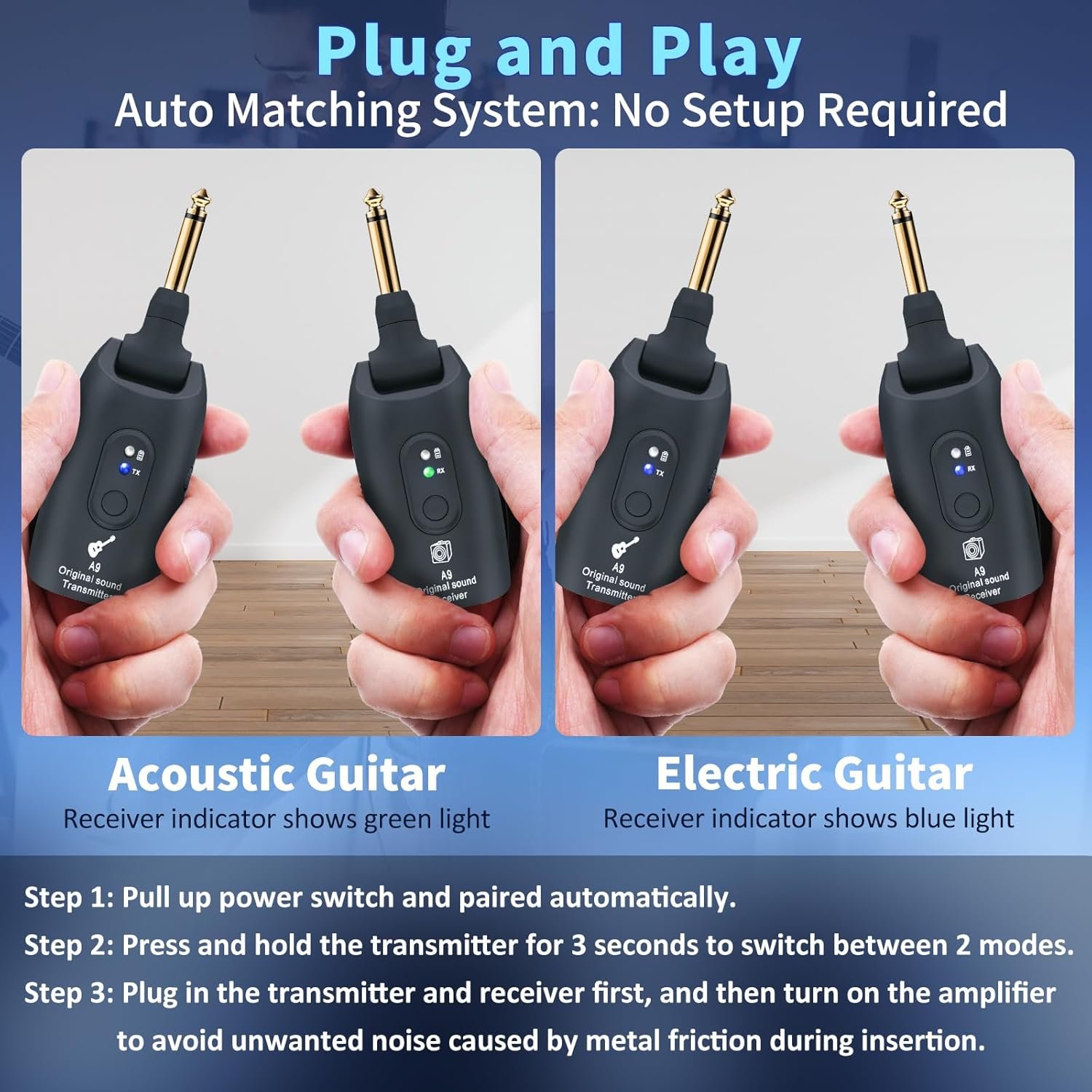
Similarly, another user commented on the ease of setup, stating, “Connecting the guitar to the transmitter was incredibly straightforward. I love that I can easily recharge the system, and it doesn’t require complicated wiring. It seamlessly integrates into my overall performance setup, making it a breeze to switch between gigs.” This flexibility and ease of use are often highlighted as significant advantages of the 2.4GHz wireless guitar system rechargeable.
Additionally, a bassist shared, “The interference-free signal of this system has made a noticeable difference in my playing. No dropout or lag; just pure, clean sound. I feel more confident performing now, knowing I won’t be tethered to the amp. I highly recommend it to anyone serious about their music!” Such experiences illustrate how this innovative system has enhanced various aspects of their playing, from mobility to sound quality.
Tips for Best Use of the Wireless Guitar System
To maximize the performance of your 2.4GHz wireless guitar system rechargeable, proper setup and maintenance are crucial. Begin by ensuring that your system is charged before each use. Most rechargeable systems offer a specific battery life, so it is beneficial to monitor this regularly to prevent unexpected disconnections during performances.
When setting up your wireless system, place the transmitter close to your amplifier, while maintaining a clear line of sight whenever possible. This reduces the risk of signal interference, which can be caused by physical obstructions or electronic devices in proximity. Additionally, check that both transmitter and receiver are on the same frequency to avoid any communication issues.
One common challenge with wireless guitar systems, including the 2.4GHz wireless guitar system rechargeable, is dropouts caused by environmental factors. To mitigate this risk, try different locations for your receiver. If you experience interference, move away from large metal objects and other devices that emit radio signals, as these can disrupt the signal quality. It may also be beneficial to use a dedicated frequency band, if available, to further enhance performance.
Long-term care of your wireless system includes regular cleaning and protection from extreme temperatures. Ensure that contacts are free of dust and debris, allowing for optimal connectivity. At the end of each performance, store the system in a protective case, minimizing the risk of damage during transport. Performing routine firmware updates, if supported, can also enhance the overall performance of your 2.4GHz wireless guitar system rechargeable.
By diligently following these tips, musicians can ensure that their wireless guitar systems consistently deliver reliable performance, contributing to a seamless and enjoyable musical experience.
Conclusion and Call to Action
In today’s rapidly evolving music landscape, the advantages offered by the 2.4GHz wireless guitar system rechargeable are becoming increasingly compelling for both amateur and professional guitarists. This advanced technology facilitates clear and uninterrupted audio transmission, allowing musicians to perform with enhanced freedom and mobility. The rechargeable feature not only ensures sustainability but also saves costs on disposable batteries, making it an economical choice for extended use.
Moreover, the simplicity of setup and operation associated with these systems removes the barriers often faced by players transitioning from wired to wireless setups. A wireless connection enhances the overall performance experience, permitting musicians to move freely across the stage, interact with the audience, and express themselves without being tethered to their equipment. The reliable transmission guarantees a consistent sound quality, which is essential during live performances and recordings.
This technological innovation empowers guitarists to explore their musicality with confidence, knowing they have the reliability of a 2.4GHz wireless system at their disposal. The ease of use, combined with the rapid charging capabilities, makes it a practical option for guitarists who wish to minimize downtime and stay focused on their craft.
For those looking to elevate their playing experience, investing in a 2.4GHz wireless guitar system rechargeable is a step towards enhancing musical performance. Embrace the freedom of wireless music and explore the possibilities it brings. Take the leap towards a more dynamic performance by making your purchase today, and enjoy the effortless mobility that comes with a wireless system.
Check It Out!