Amazon Associate Disclaimer:
As an Amazon Associate, we may earn from qualifying purchases. This comes at no extra cost to you and helps support our website.
Getting the Neck Ready for Real Playing
A guitar neck either gets out of your way or it doesn’t. The graphite-reinforced quartersawn maple neck on the Wolfgang Special Striped is built to stay put through temperature swings and long rehearsal blocks, which matters more than most players realize until they’ve fought a neck that shifts under stage lights. The 12″-16″ compound radius means the fretboard flattens out as you move up, so chord work near the nut feels comfortable while bends up around the twelfth fret don’t choke out. That’s the kind of detail that shows up in muscle memory before it shows up in conversation — your hand just stops thinking about it.
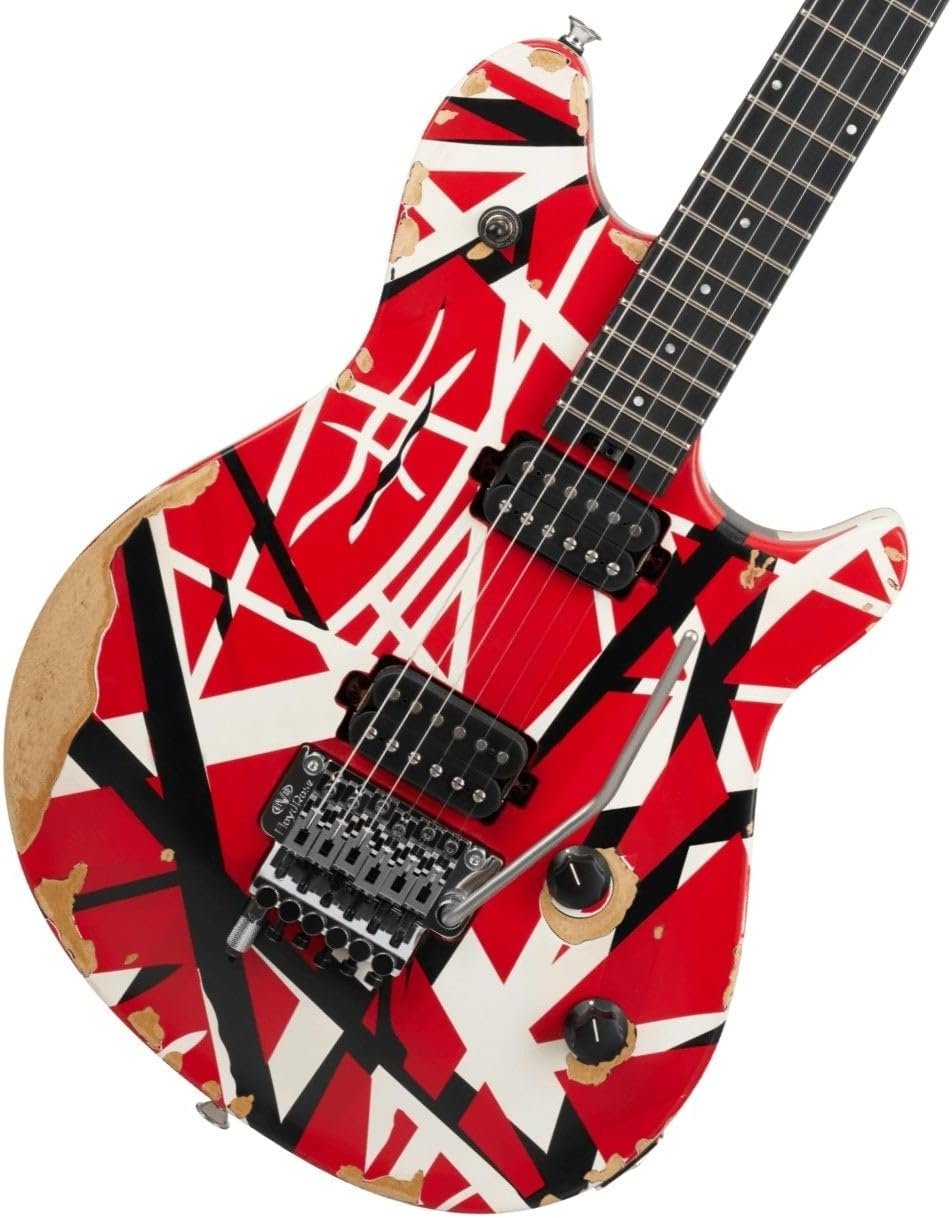
The ebony fingerboard adds a tight, controlled feel under the fingers, smooth enough that fast runs don’t drag. Paired with 22 jumbo frets, there’s room to dig in on bends without losing string contact, which is useful whether you’re working through scale patterns in a practice room or chasing a lead line during a set.
A Neck That Doesn’t Need Babysitting
The heel-mount truss rod adjustment wheel is a small feature that solves a familiar rehearsal-room problem: needing a neck tweak between songs without pulling the guitar apart. Access is right there at the heel, no screwdriver hunting, no unscrewing the neck plate. For players who gig in different rooms with different humidity and temperature, that kind of quick access keeps the instrument playable instead of becoming a mid-set distraction.
Pickups Built for Cutting Through
The custom-designed EVH Wolfgang humbucking pickups are mounted directly to the body rather than floated on a pickguard, which ties them more directly into the resonance of the basswood body. That direct-mount approach tends to translate into a fuller low end and a top end that stays present instead of getting brittle. In a full band mix, that combination helps a rhythm part hold its ground under drums and bass, and it gives lead lines the kind of sustain that lets a note ring out instead of dying early.
For anyone working on songwriting or building out riffs at home, that sustain changes how phrases get shaped. A note that holds invites you to lean into vibrato or let a bend breathe, rather than rushing to the next note because the last one is already fading.
Controls Built for the Picking Hand
Two small control choices here solve problems that show up constantly during live playing. The low-friction volume knob is built for swells — rolling the volume in and out smoothly for those violin-style effects that need a controlled, even sweep rather than a jerky pot. Meanwhile, the tone knob is intentionally stiffer, high-resistance enough that it resists getting bumped by accident during fast picking or an aggressive strumming pattern. Anyone who’s had a tone setting drift mid-song because a sleeve or a pick grazed the knob will recognize why that resistance matters.
It’s a setup that respects how a picking hand actually moves across the body of the guitar during a set — fast, close, and not always precise.
Staying in Tune Through Whatever Happens
The EVH-branded Floyd Rose locking tremolo, combined with the Floyd Rose locking nut, is built around one core promise: pitch stability under stress. Heavy whammy bar use, aggressive bends, even a hard strum session — the locking system keeps the guitar from drifting out of tune the way a standard tremolo bridge might. For a rehearsal setting, that means less time retuning between takes. For a live setting, it means less time checking pitch between songs while the room is waiting.
The EVH D-Tuna adds another layer of practical flexibility. Flip it and you’re in Drop D instantly, flip it back and you’re at standard tuning, no re-tuning by ear and no swapping guitars mid-set. For a set list that moves between tunings, that single mechanism removes a logistical headache that otherwise eats into stage time or forces awkward pauses.
A Body Built to Handle the Set
The basswood body with an arched top keeps the instrument light without sacrificing resonance, which matters over the course of a two-hour rehearsal or a full gig where guitar weight becomes noticeable by the third song. Basswood tends to produce a balanced tonal foundation, letting the pickups and hardware do more of the tonal shaping rather than fighting an overly bright or overly dark wood character.
The aged striped finish — red with black and white stripes — paired with distressed chrome hardware gives the instrument a worn-in look right out of the case. For players who like their gear to look like it’s already been through some rooms, that finish fits naturally into a stage setup without needing years of actual wear to get there.
Fitting Into a Working Guitarist’s Routine
None of these features exist in isolation. They’re built to work together across the parts of a guitarist’s routine that actually matter: getting through a rehearsal without fighting tuning stability, adjusting neck relief without a toolkit, switching tunings without stalling the set, and having pickups that hold their own in a mix. The compound radius neck and jumbo frets support technical playing, the locking tremolo and D-Tuna support tuning reliability, and the direct-mounted humbuckers support tonal presence.
Whether the focus is home practice, refining a set list, or prepping for a show, the Wolfgang Special Striped is built around the practical demands of playing regularly — not just sounding good in a quiet room, but holding up through the noise, movement, and unpredictability of an actual set. It settles into a variety of playing situations without asking the player to work around it, which is really what a working instrument is supposed to do.