The Guitalele That Fits Your Real Life
Amazon Associate Disclaimer:
As an Amazon Associate, we may earn from qualifying purchases. This comes at no extra cost to you and helps support our website.
The Guitalele That Fits Your Real Life
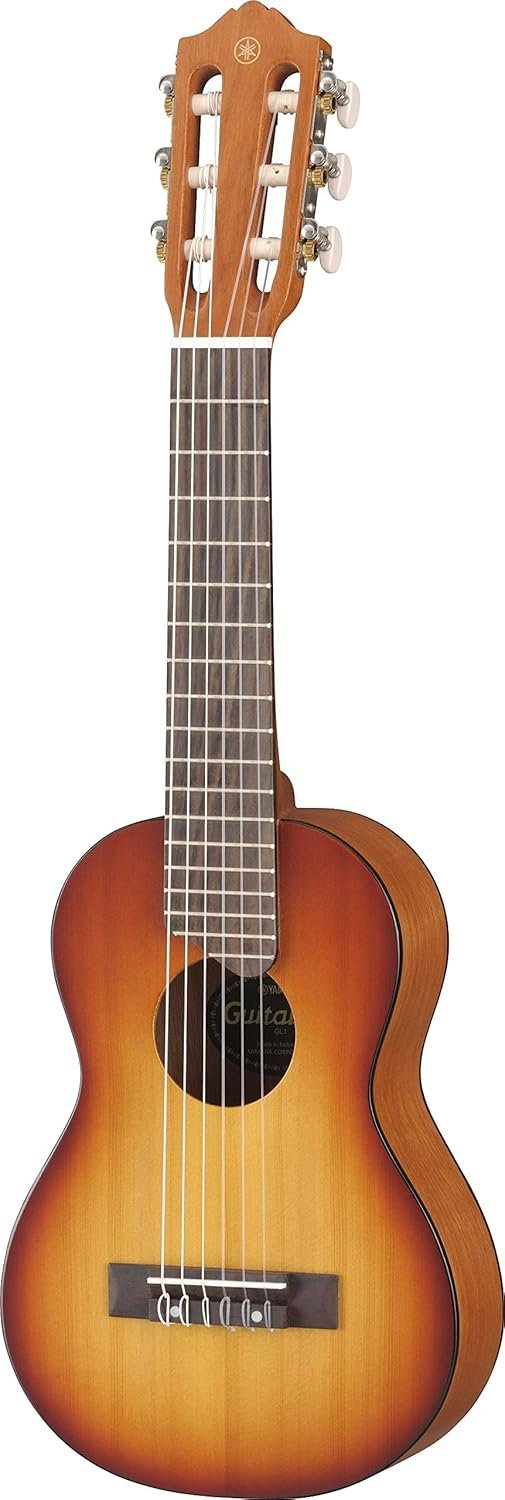
You know that feeling when you want to play but the guitar’s in the other room, or you’re traveling, or you just don’t feel like wrestling with a full-size dreadnought? The Yamaha GL1 Guitalele sidesteps all of that. It’s got six nylon strings, a familiar guitar layout, and a body that’s roughly the size of a baritone ukulele. But don’t let the size fool you—this thing plays like a guitar, not a toy.
What You’re Actually Looking At
The GL1 runs a 17-inch scale length. That’s small enough to tuck under your arm on a bus, toss in an overhead bin, or leave on the coffee table without your partner giving you the look. The whole package weighs in at 2.7 pounds—light enough that you forget you’re holding it after a while.
Yamaha built the top from spruce, with meranti back and sides. That combination gives you a clear, articulate voice that projects better than you’d expect from something this size. The neck’s rosewood, same as the fretboard. Chrome tuners keep it stable, and a maple bridge handles the string anchoring.
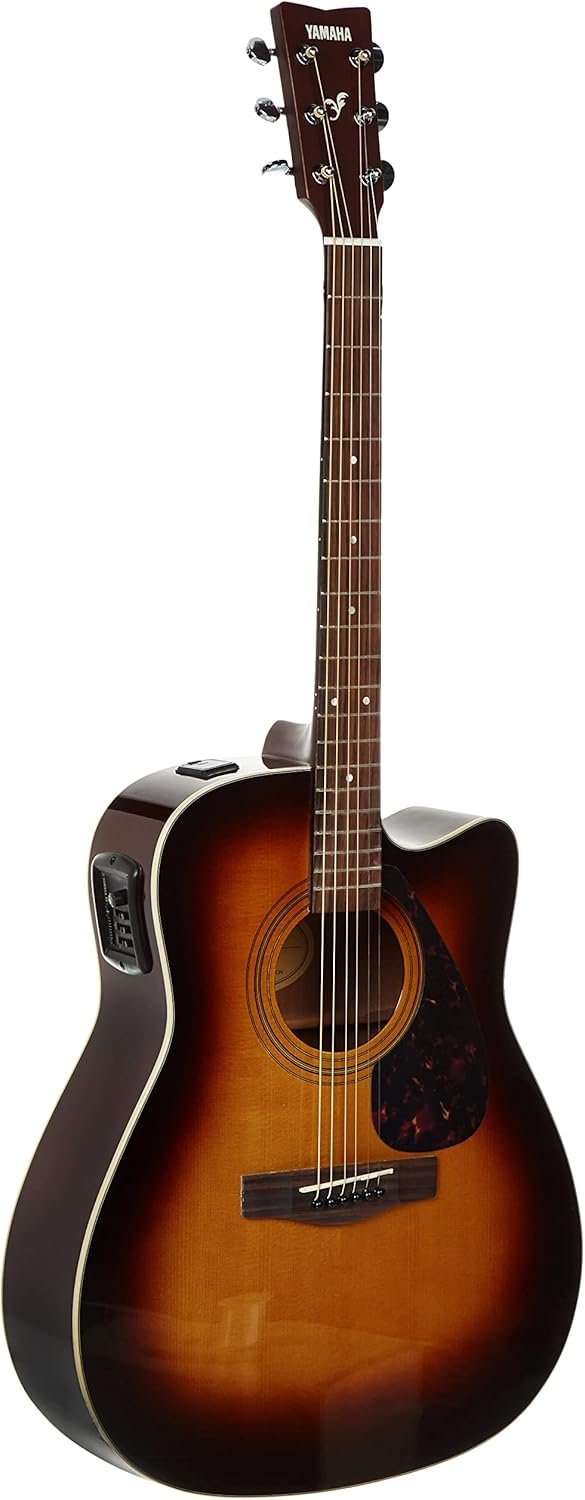
The Tobacco Sunburst finish gives it a classic look without trying too hard. It’s matte, not glossy, so you’re not dealing with fingerprint smudges or reflections under stage lights.
The Tuning Thing—And Why It Matters
Here’s where it gets interesting. The GL1 tunes up to A—A/D/G/C/E/A, to be exact. That’s a fourth higher than standard guitar tuning. If you’ve been playing guitar for any length of time, your hands already know what to do. The chord shapes are the same. The fingerings are the same. You just capo everything at the fifth fret in your head and let it rip.
This isn’t a gimmick. It’s a practical choice that makes the instrument work at this scale. Tune a 17-inch scale guitar to E standard and the strings feel floppy, the intonation goes south, and you spend more time fighting the instrument than playing it. The A tuning keeps the string tension where it belongs—firm enough for clean fretting, loose enough for comfortable bends and that nylon-string warmth.
Where This Thing Shines
Practice sessions. This is the guitar you leave out. The one you grab when you’ve got ten minutes between things. The one that doesn’t feel like a production every time you want to run through a few changes. A full-size guitar demands space and attention. The GL1 just sits there, ready.
Travel. The included gig bag means you’re not showing up to a hotel room with a hard case that takes up half the closet. Throw it in the car, sling it over your shoulder on a train, stuff it in the overhead bin on a plane. It’s not going to fight you.
Songwriting. There’s something about a different tuning and a different scale that shakes ideas loose. The GL1 sits in a different sonic space than your standard acoustic. The nylon strings respond differently. The higher pitch sits in a range that cuts through without competing with vocals. If you’re stuck in a rut, this kind of change can crack things open.
Quiet practice. Nylon strings are gentler on the ears—yours and anyone else’s in earshot. The GL1 doesn’t bark like a steel-string acoustic. It’s got a warm, balanced voice that fills a room without dominating it. Late-night practice sessions won’t get you evicted.
The Spruce Top and What It Does
That spruce top isn’t just for show. Spruce gives you clarity and articulation—each note speaks clearly, even when you’re digging in. The meranti back and sides add warmth and resonance without weighing the instrument down. The result is a voice that’s surprisingly full for a guitar this size.
Play fingerstyle and you get that classic nylon-string bloom on each note. Strum chords and the sound opens up with a balanced, even response. It’s not going to compete with a concert hall guitar, but it’s not meant to. It’s meant to be the guitar you actually play, day in and day out.
The Gig Bag and Real-World Portability
Yamaha includes a soft gig bag. It’s not fancy, but it does the job—protects the finish, holds the guitar, gives you a handle. For a guitar this size, that’s all you really need. You’re not checking it at the airport. You’re carrying it on, tossing it in the backseat, or hanging it on a hook in your practice space.
Who This Is For
The guitarist who travels. If you’re on the road regularly, you know the drill—hotel rooms, borrowed instruments, or going cold turkey for days at a time. The GL1 fits in a carry-on. It’s small enough to pack alongside your clothes. You can actually practice on the road without rearranging your entire suitcase.
The beginner. Six strings, familiar chord shapes, nylon comfort. The shorter scale means less stretching. The nylon strings mean less finger pain. The whole package is less intimidating than a full-size guitar. If you’re teaching someone, this is the kind of instrument that doesn’t scare them off.
The experienced player looking for something different. You’ve got your main axes. You know what they do. The GL1 offers a different voice, a different feel, a different approach. It’s not a replacement. It’s an addition. Something that sits in a different sonic space and invites you to play differently.
The songwriter. When you need to break out of familiar patterns, changing instruments can change the way you hear things. The GL1’s higher tuning and nylon voice sit differently in a mix. It cuts through without overpowering. It’s a tool for hearing your songs from a fresh angle.
Living With the GL1
This isn’t a guitar that demands special treatment. It’s built to be used. The matte finish hides the inevitable bumps and scratches of real-world use. The chrome tuners hold their settings. The nylon strings don’t corrode the way steel strings do. You can leave it out, pick it up, play it, and put it down without a ritual.
The 17-inch scale means the frets are closer together. If you’ve got smaller hands or just prefer a tighter fret spacing, this is comfortable. If you’re used to a full-scale guitar, it takes a minute to adjust, but once you do, the reach feels natural. You’re not stretching for chords the way you might on a dreadnought.
The Sound in Practice
Let’s be straight about what this does and doesn’t do. It doesn’t have the low-end thump of a full-size acoustic. That’s physics—you can’t get a 17-inch body to move air like a 25-inch scale dreadnought. What it does have is a focused, clear voice that sits in a different frequency range.
The highs are present without being brittle. The mids are forward and articulate. The lows are there, just not booming. For practice, for songwriting, for travel, for anything that doesn’t require filling a hall with acoustic projection, it works.
Strum with a light touch and you get a warm, rounded sound. Dig in and the spruce top responds with more bite and projection. Play up the neck and the voice changes—more focused, more present. It’s an instrument that rewards different approaches.
Why This Over Something Else
No comparisons here, because that’s not the point. The point is what this instrument does for your playing life. It’s the guitar that’s always there. The one that doesn’t require a production to play. The one that fits your hands, your schedule, your space.
A lot of guitars sound good in the shop and gather dust at home. The GL1 is built for the opposite—for the living room, the hotel room, the practice space, the back seat of the car. It’s an instrument that gets played because it’s easy to play.
The Practical Details
Scale length sits at 17 inches. Overall length is about 27.5 inches. Width at the lower bout is around 9 inches. Depth is about 2.75 inches. Nut width runs 1.875 inches. String spacing sits at 10.2 millimeters.
If those numbers don’t mean much to you, here’s the translation: it’s small, it’s light, and it fits comfortably in your hands. The string spacing is generous enough for fingerstyle work. The nut width is narrow enough that barre chords don’t require superhuman hand strength.
Yamaha backs it with a one-year manufacturer warranty. Amazon’s 30-day return policy applies as well. The GL1 includes the gig bag, so you’re not hunting for a separate case before you can take it anywhere.
The Bottom Line on the GL1
This is not a guitar that tries to be everything to everyone. It’s a focused tool for specific situations—practice, travel, songwriting, quiet playing. It does those things well because it’s designed for them, not because it’s trying to replace your main guitar.
The Yamaha GL1 Guitalele fits a specific role in a guitarist’s life. It’s the instrument you actually play because it’s always within reach. It’s the one you take on the road because it doesn’t fight your luggage. It’s the one you grab for late-night writing sessions because it doesn’t wake the house.
If you’re looking for something that expands your playing life rather than complicating it, this is worth a look. It’s a practical tool for real-world playing, built by a company that knows how to make instruments that work. The Tobacco Sunburst finish looks good. The nylon strings feel right. The scale works.
Most importantly, it makes you want to play. And that’s the whole point.
Check It Out!