Keeping Your Frets Gig-Ready and Reliable
Amazon Associate Disclaimer:
As an Amazon Associate, we may earn from qualifying purchases. This comes at no extra cost to you and helps support our website.
The Gear Between You and the Note
Let’s talk about the part of the guitar that actually touches the string. The fretwire. It’s the real interface, the point where your hand’s energy meets the wood and the string. And when it’s not right, nothing feels right. A high fret here, a sharp edge there, and all that practice time starts to feel like you’re fighting the instrument instead of playing it. The good news is that getting things smooth and level isn’t some arcane ritual reserved for luthiers in white coats. It’s a skill, and having the right kit in your workbench changes the whole game. This isn’t about fancy shop setups; it’s about the practical reality of keeping your guitar reliable for the next gig, the next rehearsal, or just that late-night session when inspiration finally hits.
The Reality of Fret Wear and Tear
If you play with any regularity, your frets are taking a beating. It’s not a flaw; it’s just physics. You’re pressing steel against a softer metal, over and over again, in different positions, with different amounts of force. Over time, that causes uneven wear. You might start noticing a little buzz on the fifth fret of the low E string that wasn’t there last month. Or maybe the frets feel a bit “gritty” under the strings when you bend. That’s the friction building up. It’s the sign that your playing surface is getting a little rough.
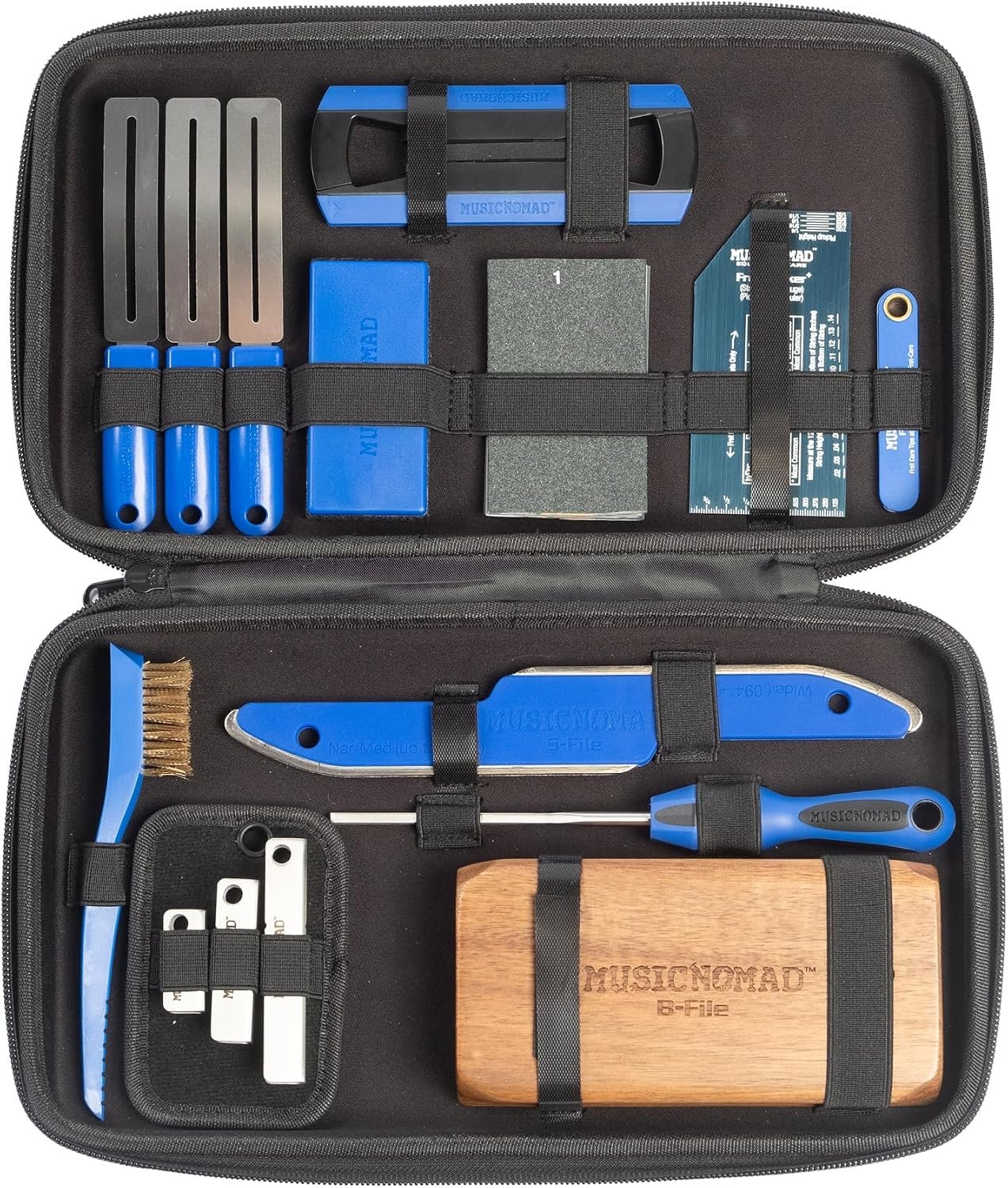
This is where a solid diagnostic mindset comes in. You don’t want to guess at what’s wrong. A set like this gives you the ability to actually see what’s going on. Instead of adjusting the truss rod to compensate for a problem that lives in the fretwire itself, you can pinpoint the source. A fret rocker is the first tool you reach for when you feel that buzz. It’s a simple concept, but it’s the quickest way to find the offending fret without any guesswork. It tells you exactly where the high spot is, so you can address the real issue, not just the symptom.
Getting Down to the Level
Once you’ve located the problem, the real work begins. For most players, the thought of leveling frets is a little intimidating. But it’s a process of removing material in a controlled way. The key is patience and the right cut. For spot-leveling a single high fret, you need a file that’s precise enough to take down the high spot without making the rest of the fret uneven. The U-shaped files in a comprehensive kit are designed for just that. They allow you to work on a single fret without affecting the ones next to it. It’s about precision, not brute force.
The goal here isn’t to remove a ton of metal; it’s to take off just enough so that the fret sits flush with its neighbors. This is the step that directly cures fret buzz. It’s the foundation of a guitar that feels effortless to play. You get that clean, even response across the entire fretboard. It’s a feeling of control. You don’t have to compensate your technique to work around a dead spot on the neck. You can just play.
Shaping the Crown for Feel and Tone
After you level, the top of the fret is flat. If you left it like that, the string would sit on a plateau, which affects intonation and tone, and it just doesn’t feel right. You need to restore the curve, or the crown. This is where the crowning file comes into play. It’s the step that brings the touch back.
A good crowning file is designed to ride over the fret and shape it back into a nice, rounded profile. It’s a rhythmic motion. You’re not hacking away at it; you’re guiding the file to create a consistent shape. This is what gives the guitar that classic, smooth feel under the fingers. When you bend a note, you want the string to glide over the fret, not catch on a sharp edge. That smoothness is what you’re chasing here. A well-crowned fret is a joy to play. It doesn’t grab the string; it lets it vibrate freely.
Putting an End to Fret Sprout
Then there’s the issue of fret sprout. That’s the term for when the ends of the frets start to poke out past the edge of the fretboard. It usually happens when the wood of the neck dries out and shrinks a little, leaving the metal frets exposed. It can make the neck feel like a cheese grater, especially when you’re moving your hand up and down for chords or solos. It’s a common annoyance that’s surprisingly easy to fix.
A beveling file is the ticket here. It’s designed with specific angles so you can address the ends of the frets with control. You can bevel the edge down so it’s flush with the side of the fretboard, and then you can dress the ends to round them over. This is pure comfort. It eliminates that abrasive feeling and makes the guitar feel like a finished, professional instrument. It’s a small detail that makes a huge difference in how the guitar feels in your hand. It lets you focus on the music, not on the sharp bits catching your thumb or palm.
The Final Smooth and Polish
The functional part of the work is done. The frets are level, crowned, and the edges are dressed. But the job isn’t finished until they’re polished. It’s the difference between a guitar that’s just “fixed” and one that feels truly dialed in. You want those frets to be as smooth as glass. A polished fret allows the string to slide effortlessly, which makes bending and vibrato feel fluid and natural.
The polishing process, using things like abrasive tracers and polish compounds, is about removing the fine scratches left by the files. You work your way through different grits to bring the metal back to a high shine. It’s satisfying work. You see the dull, scratched metal turn into a bright, reflective surface. It’s the final step that makes all the previous work feel worth it. It’s also the step that protects the frets, making them less susceptible to corrosion and wear. A clean, polished fret is a happy fret.
Keeping the Fretboard Safe
One thing that’s easy to overlook is protecting the fretboard itself while you’re working on the metal. The last thing you want is to gouge the wood with a file while you’re trying to crown a fret. That’s where the grip guards come in. These simple pieces of material slide under the strings and onto the fretboard, acting as a shield. They let you work aggressively on the frets without worrying about the cosmetic damage.
It’s a small thing, but it keeps your guitar looking good. It saves you from having to do a messy fretboard repair down the line. It’s about respecting the instrument while you work on it. You’re fixing the problem without creating new ones. It makes the whole process smoother and less stressful, knowing that you’re only modifying the parts you intend to.
The Value in the Kit
Having everything in one place is a game-changer. When you’re in the middle of a setup, the last thing you want to do is hunt around the bench for a specific file. A dedicated storage case means the tools are always organized and ready to go. You pull it out, you know exactly where everything is, and you can focus on the work. That organization leads to better results because you’re not interrupting your flow to search for a file. You can move through the process of leveling, crowning, beveling, and polishing in a single, uninterrupted session. It makes a task that can feel like a chore feel more like a ritual.
Reliability You Can Feel
At the end of the day, this work is about reliability. It’s about knowing that when you step on stage or plug in at rehearsal, your guitar is going to behave. It’s going to be in tune, it’s going to intonate properly, and it’s not going to buzz out on a critical note. That confidence is a big part of being able to play your best. You can stop worrying about the mechanics of the guitar and start focusing on the music.
Taking care of your frets is a straightforward, essential part of being a guitar player. It’s not about perfectionism; it’s about consistency. A well-maintained neck makes everything else easier. Your technique improves because the instrument responds predictably. Your tone is clearer because the strings are vibrating freely. And you end up playing more because the guitar feels great.
It doesn’t matter if you’re a weekend warrior or a session player, the way your guitar feels affects how you play. Having a reliable set of tools to address the most common issues with fretwear is an investment in your own consistency. Whether you’re a player who likes to do their own setups or just someone who wants to understand what a pro tech is doing, these tools demystify the process. They give you the ability to maintain the instrument that’s the vehicle for your music. The goal is simple: a smooth neck, a buzz-free instrument, and the freedom to play without hesitation. It’s about keeping the connection between your hands and the fretboard as direct and clear as possible, gig after gig, session after session.
Check It Out!