Soundbrenner Pulse Vibrating Metronome
As an Amazon Associate I earn from qualifying purchases.
The Soundbrenner Pulse takes an ordinary practice tool and moves it from the ear to the body. Instead of producing an audible click, this wearable metronome delivers each beat through vibration. Guitarists can wear it on the wrist, arm or ankle, allowing the sound of the instrument to remain clear while the pulse provides a physical timing reference.
That makes it quite different from multifunctional guitar gadgets. The Roadie 3 smart tuner and metronome combines several practical jobs, whereas the Pulse concentrates almost entirely on helping musicians feel a steady beat. Its focused design is appealing, but buyers should understand what that approach involves before choosing it.
What You Should Know Before Buying
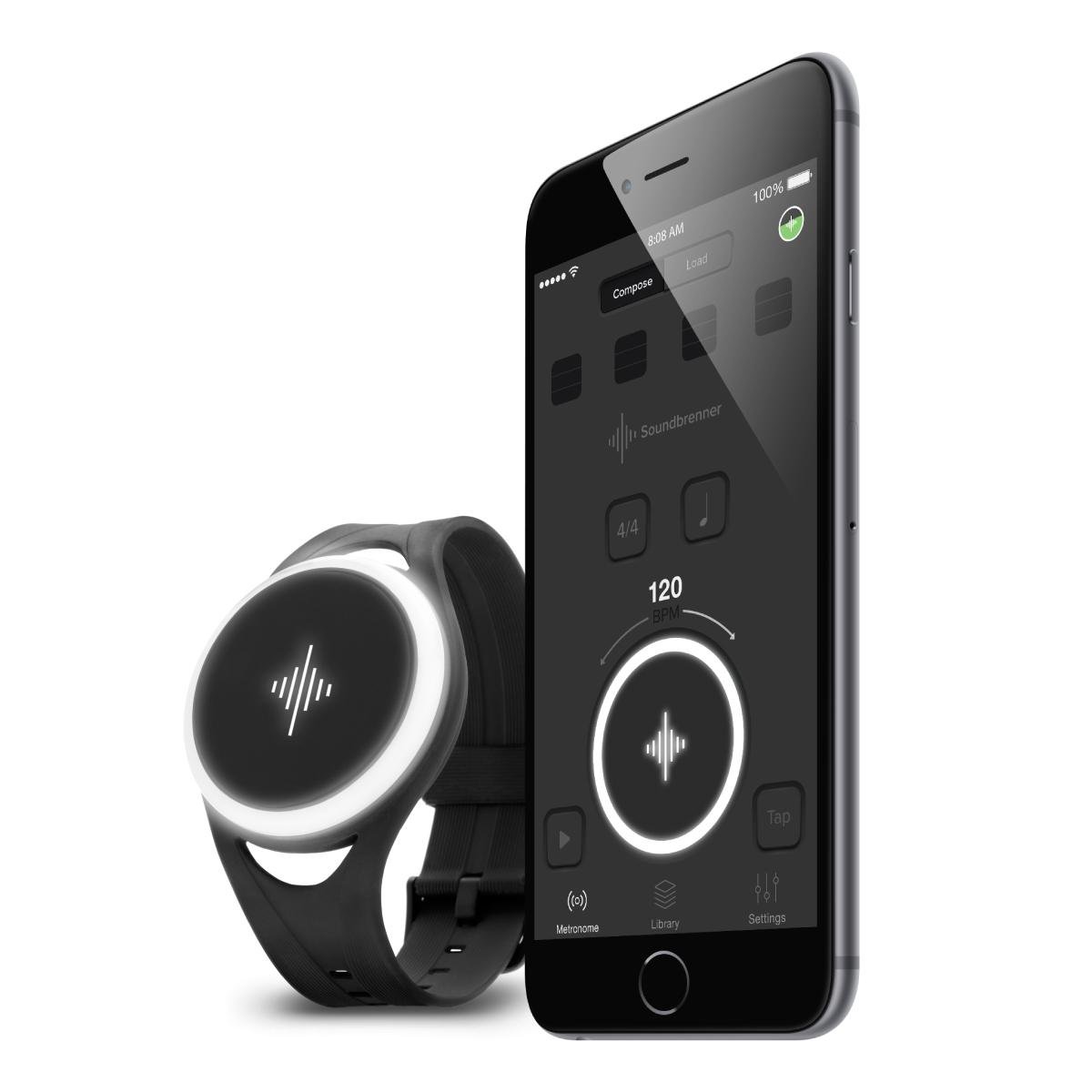
The Pulse is a circular black wearable measuring roughly 50mm across and weighing about 47g. Its polycarbonate body feels more like a substantial sports watch than a traditional pocket metronome, while the flexible silicone bands allow it to be worn in several positions. Two band sizes are supplied, but the module is still fairly prominent on a smaller wrist. Players who dislike wearing watches may prefer it on the upper arm or ankle.
Feeling a rhythm is not automatically easier than hearing one. There is a learning period while the brain adjusts to treating vibrations as musical information. Some players understand the pulse quickly, while others may initially find it less obvious than a familiar click. Picking movement, strumming and general body motion can also compete with the sensation, particularly when the unit is worn on the strumming arm.
Placement therefore matters. A vibration that feels clear on the wrist while sitting still may become less noticeable during energetic playing. Moving the Pulse to the upper arm, ankle or another suitable position can help, but experimentation is part of ownership. The optional body strap is needed for positions such as the chest or thigh, and it is not included with the standard package.
This device does not listen to the guitar, detect timing mistakes or pull a drifting player back into time. It supplies a reference beat, and the musician must actively follow it. It also lacks the display, chromatic tuner and pitch-detection features found on some conventional practice tools. Players wanting an inexpensive visual tuner and audible metronome in one unit may find the LEKATO rechargeable metronome and tuner more straightforward.
Basic functions can be controlled from the Pulse itself. Tapping starts or pauses the beat, while rotating the outer control changes the tempo. More detailed adjustments—including time signatures, subdivisions, accents, vibration behaviour and LED colours—are handled through the companion mobile app. The hardware can work independently once configured, but anyone wanting its broader features must be comfortable using Bluetooth and a phone.
That app-based element introduces a few practical complications. Pairing must be completed through the Soundbrenner app rather than directly through the phone’s normal Bluetooth menu. Incorrect pairing can lead to failed reconnections or controls that appear unresponsive. Firmware updates may also require the app to remain open for several minutes. None of this is unusually difficult, but the experience is less immediate than switching on a mechanical metronome.
The rechargeable battery provides more than six hours of metronome use under the manufacturer’s stated conditions. That should cover normal practice sessions, although a forgotten charge can leave the device unusable until power is available. There is no replaceable battery to rescue a session. The Pulse is rated for sweat resistance rather than full waterproofing, so it should be kept away from rain, showers and accidental submersion.
Up to five compatible Soundbrenner wearables can be synchronised through one mobile device. This could help a small group practise with the same silent pulse, but it depends on every player being willing to wear and respond to vibration. Bluetooth reliability, device placement and different sensitivity levels can all affect the experience. It should not be treated as a guaranteed replacement for visual cues, an audible count-in or clear communication between musicians.
Who Should Probably Avoid This Product?
Guitarists who already practise comfortably with an audible metronome app may not gain enough from a separate wearable. It is also a poor match for anyone who struggles to notice vibration, dislikes wearing a large watch-style object or wants equipment that works without charging. Players mainly seeking a tuner, practice recorder, rhythm analysis tool or automatic feedback will need other equipment because the Pulse does not provide those functions.
It is equally important not to confuse silent timing assistance with silent guitar amplification. The Pulse supplies rhythm but does not accept a guitar signal, create amplifier tones or send sound to headphones. A player whose main concern is practising an electric guitar quietly would be better served by something such as the BOSS Katana GO headphone amplifier . The two products address completely different parts of a practice routine.
Musicians who rely heavily on a strong first beat may also need time to configure the vibration patterns properly. A continuous sequence of similar pulses can feel less informative than accented clicks. The app allows more detailed rhythm settings, but owners must deliberately set them up rather than expecting the wearable to understand the music automatically.
Who Will Benefit Most?
The strongest audience is guitarists who understand the value of metronome practice but dislike having a click competing with the instrument. Feeling the beat can leave the ears free to concentrate on note clarity, chord changes, dynamics and unwanted string noise. It may be particularly helpful for repetitive scale work, alternate-picking exercises and rhythm-guitar patterns where a stable physical pulse encourages consistency.
It also suits musicians who enjoy focused, technology-assisted practice and do not mind spending a little time configuring an app. The visual LED ring provides another reference, while the different wearing positions let each player find where the beat feels clearest. Teachers could use it to introduce a more physical sense of tempo, although students should still learn to work with traditional audible and visual timing methods.
Small groups may appreciate the synchronisation feature when they want to rehearse without filling the room with competing metronome clicks. Players exploring other unusual practice equipment can find more ideas among the Guitar Gear guides . The Pulse remains a specialist tool rather than a complete practice system, so it works best alongside careful listening and regular playing.
The appeal of the Soundbrenner Pulse lies in its narrow purpose. It replaces an audible beat with a firm physical cue and packages that idea in a smooth, lightweight wearable. It asks for patience during the adjustment period, regular charging and some dependence on an app, but it offers a genuinely different way to develop timing.
For guitarists who respond well to touch and movement, that difference can make structured rhythm practice feel less intrusive. Those who prefer the certainty of a loud click may never warm to it, but the Pulse gives curious players another sensible route towards steadier, more deliberate playing.
As an Amazon Associate I earn from qualifying purchases.
Opens Amazon (paid link)