Yamaha THR30II Wireless Guitar Amp
As an Amazon Associate I earn from qualifying purchases.
The Yamaha THR30II Wireless Guitar Amp is built around a simple idea: giving guitarists a proper range of amp sounds without requiring a conventional amplifier to dominate the room.
Its compact desktop shape makes it particularly suited to home playing, but there is considerably more going on inside than its size suggests. Yamaha combines 15 guitar amp models with effects, Bluetooth audio, USB recording, a rechargeable battery and an integrated wireless receiver.
For someone who spends most of their playing time at home, that combination can remove much of the usual setup. The guitar, the THR30II and somewhere comfortable to sit may be all that is needed.
Why it works for guitar practice
One of the strengths of the THR30II Wireless is that it still feels like an amplifier.
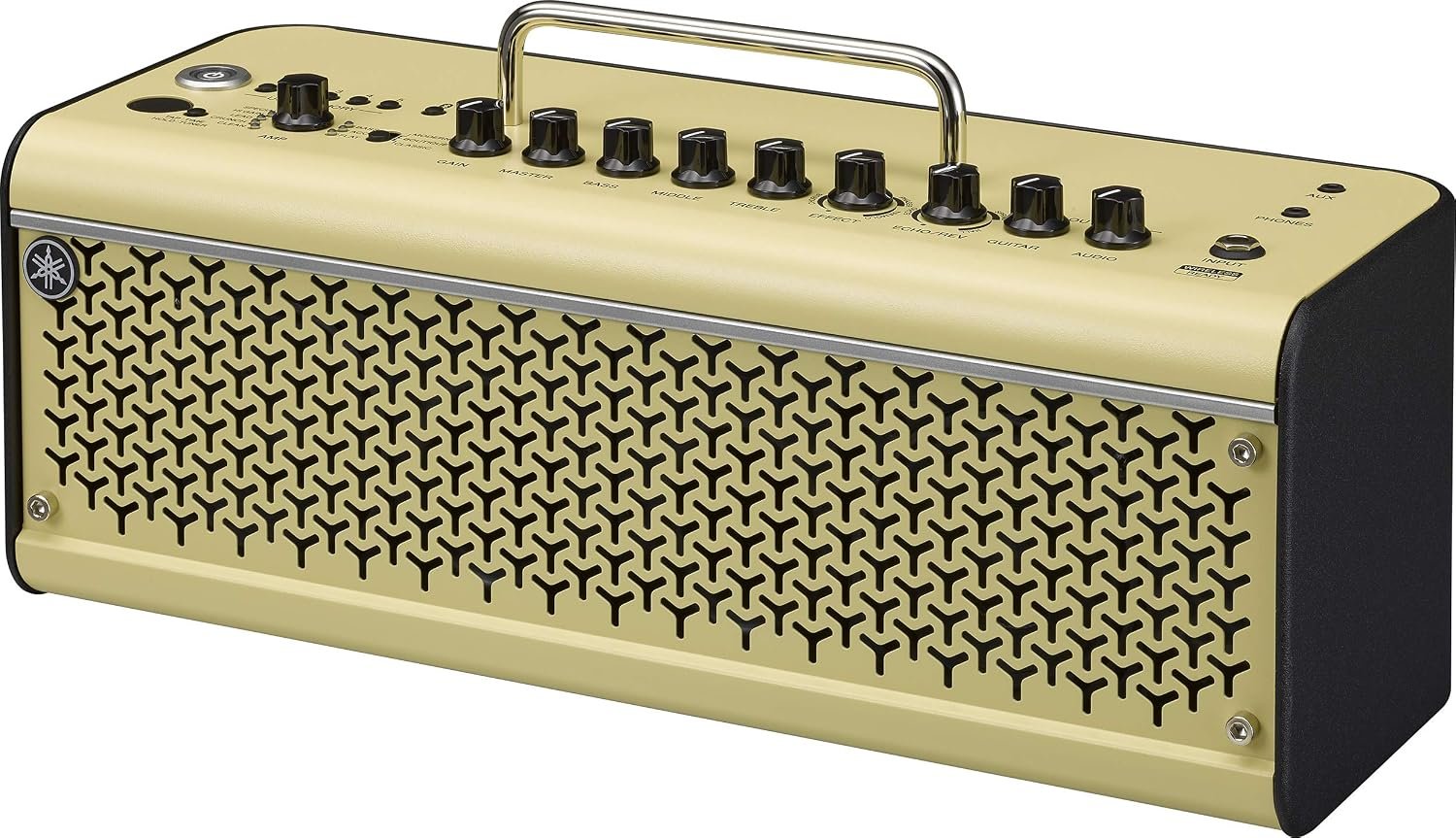
There are proper physical controls across the top rather than a large touchscreen taking over the experience. Gain, master level and tone controls sit alongside the amp selection and effects, so basic adjustments can be made by reaching over and turning a knob.
The 15 guitar amp models cover a broad range of tones, while Yamaha also includes bass, acoustic and flat voicings. This makes the THR30II more flexible than a small practice amp intended for only one style of guitar playing.
Built-in modulation, echo and reverb effects mean a separate pedalboard is not essential for a straightforward practice session.
For deeper editing, Yamaha’s THR Remote app gives access to additional controls including compressor and noise-gate settings. Bluetooth can also be used for audio playback, so songs and backing tracks can be played through the amp while practising.
That is particularly useful when learning parts by ear. Instead of having music coming from a phone speaker on one side of the room and the guitar amplifier somewhere else, both can come from the same compact setup.
What it feels like to use
The THR30II Wireless has quite a different physical presence from a traditional guitar combo.
It is relatively low and wide, with a metal grille across the front and a row of controls along the top. It feels more like a piece of well-made desktop audio equipment than a miniature stage amplifier.
That matters in a living room, bedroom or home studio. It can sit on a shelf, desk or cabinet without looking as though a large black amplifier has been temporarily abandoned there.
The stereo speaker arrangement also gives it a broader sound than its compact enclosure might suggest. Yamaha uses its Extended Stereo Technology for audio playback, which helps backing tracks and music feel less confined to a small box.
The built-in rechargeable battery changes how the amp can be used too. You are not permanently tied to a wall socket, so the amp can be moved from one room to another or taken somewhere without immediately looking for mains power.
Yamaha rates battery operation at up to around five hours, depending on use.
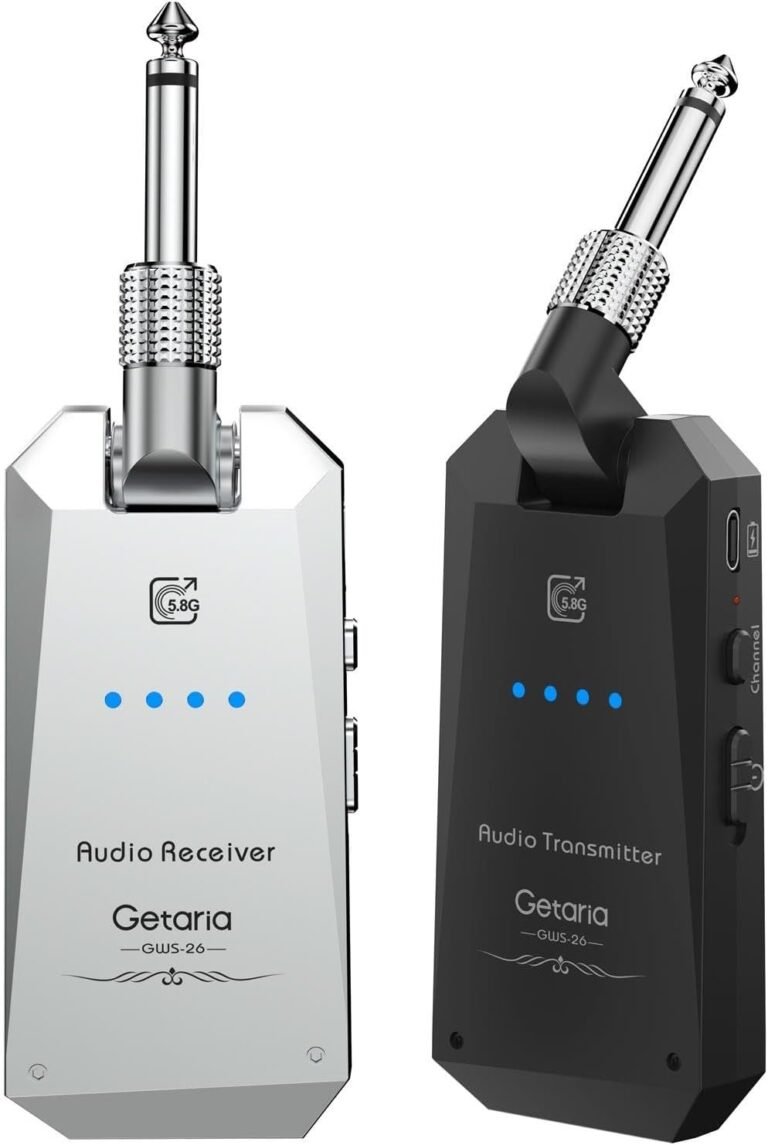
There is also a built-in guitar wireless receiver. With a compatible Yamaha YW10T or Line 6 Relay G10T/G10TII transmitter, the guitar can connect without the usual instrument cable trailing across the floor. The transmitter itself is sold separately.
For recording, the USB connection allows the THR30II to work directly with a computer, while the dedicated quarter-inch line outputs give the 30-watt model additional connection options for recording or suitable performance setups.
The drawbacks
The THR30II Wireless is compact and flexible, but that does not mean it is the right amplifier for every guitarist.
Its biggest limitation is its intended environment. This is fundamentally a desktop and home-oriented amplifier. Although Yamaha rates the THR30II at 30 watts, the design and compact stereo speakers are very different from a traditional 30-watt guitar combo with a large single speaker.
If the main requirement is playing with a loud drummer in a rehearsal room or using an amp as a conventional backline on stage, a more traditional guitar amplifier may make more sense.
The wireless name can also cause some confusion.
The receiver is built into the amp, but completely wireless guitar playing still requires a compatible YW10T, Line 6 Relay G10T or G10TII transmitter, which is not supplied as part of the basic amplifier package.
So the word “Wireless” does not mean you can simply pick up any guitar and connect it without additional hardware.
The rechargeable battery is another useful feature with a natural limit. Yamaha quotes up to around five hours of operation. That is generous for home practice or taking the amp outside for an afternoon, but it is not an all-day power source. Longer sessions away from mains electricity require some planning.
There is also a lot of technology inside what appears to be a simple amplifier.
Bluetooth, app editing, modelling, USB audio and wireless guitar support are strengths for someone who will use them. A player who wants one clean sound, one overdriven sound and absolutely nothing involving phones or software could reasonably find much of it unnecessary.
The app is not essential for normal playing, but some deeper adjustments are only available through the editor. Guitarists who prefer every possible control to exist physically on the amplifier may find that frustrating.
Its small control panel also has to accommodate quite a few functions. The layout is sensible, but it cannot provide the same generous spacing as a full-size amplifier with large knobs spread across a wide front panel.
The stereo speakers are another trade-off. They work beautifully for the desktop concept and for playing music over Bluetooth, but they will not move air in the same way as a large guitar cabinet. Players who enjoy the physical push of a 10-inch or 12-inch speaker behind them should not expect the THR30II to reproduce that sensation.
Wireless convenience can also lead to extra pieces of equipment. Once a transmitter, phone, app and perhaps recording computer are brought into the setup, the apparent simplicity begins to depend on how far you choose to take it.
And finally, the THR30II may simply offer more capability than a beginner needs. If the only requirement is plugging in and practising a few chords at modest volume, a much simpler amplifier can accomplish that.
Its value becomes clearer when the Bluetooth playback, battery operation, modelling, recording and wireless features are genuinely useful rather than merely present.
Who it suits best
The Yamaha THR30II Wireless makes the most sense for guitarists who do a large amount of their playing at home.
It is particularly well suited to someone who wants a good-looking amplifier that can remain permanently set up in a living room, bedroom or home office rather than being packed away after every session.
Players who practise with backing tracks should appreciate the Bluetooth audio, while anyone doing simple home recording can make use of the USB connection.
It also suits guitarists who own several types of instrument. The additional bass, acoustic and flat voicings mean the amp is not restricted to a single electric guitar role.
For somebody who moves around the house while playing, the rechargeable battery and optional wireless guitar connection could be particularly useful.
Is it worth the amplifier space?
The Yamaha THR30II Wireless is less about replacing every traditional guitar amp and more about making everyday playing easier.
Its compact enclosure can stay within reach, the physical controls make basic tone adjustments straightforward, and the modelling provides enough variety to move between clean, driven and higher-gain sounds without assembling a large rig.
Bluetooth, battery operation, USB recording and optional cable-free guitar connection then add conveniences that a conventional small combo often lacks.
If the goal is a powerful stage amp with a large speaker and very little digital technology, the THR30II is probably heading in the wrong direction.
But for a guitarist who plays mainly at home and wants something compact enough to remain permanently ready, it offers a thoughtful balance between the familiar feel of an amplifier and the flexibility of modern modelling.
Explore more guitar amps in our Amplifiers section.
As an Amazon Associate I earn from qualifying purchases.