Yamaha FGX800C Acoustic-Electric Guitar
As an Amazon Associate I earn from qualifying purchases.
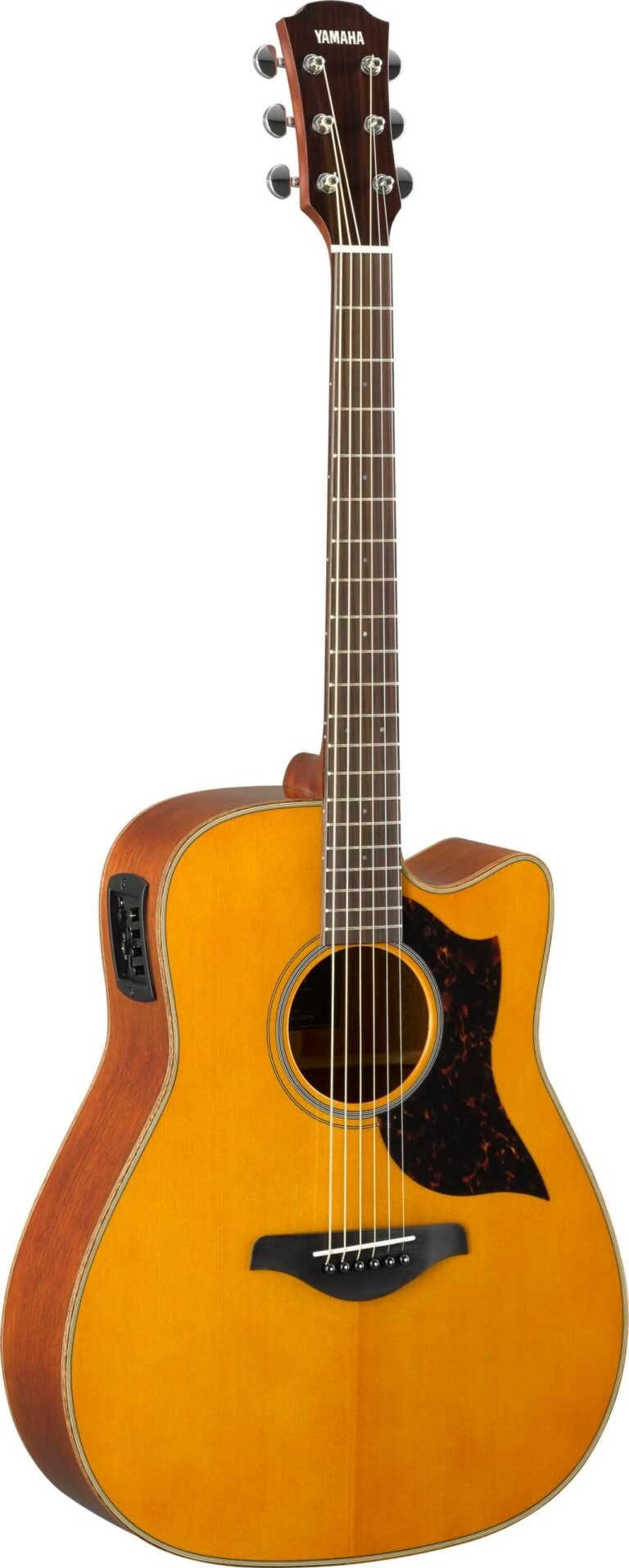
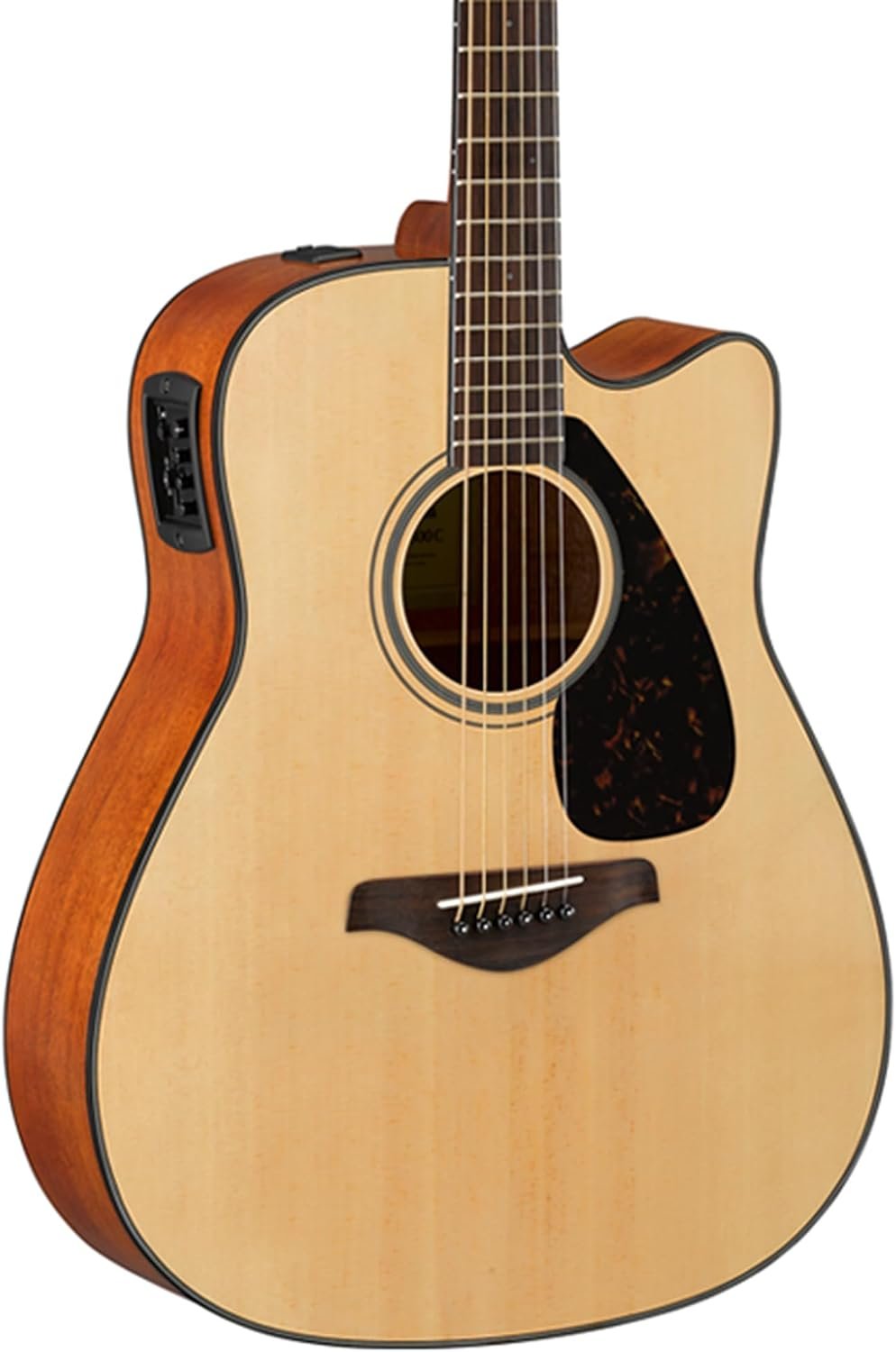
The Yamaha FGX800C Acoustic-Electric Guitar takes the familiar full-bodied dreadnought format and adds two features that make it considerably more flexible: a cutaway for easier access higher up the neck and built-in electronics for connecting to an amplifier or PA system.
At its heart, though, this is still very much an acoustic guitar. The solid spruce top sits over nato/okoume back and sides, while Yamaha uses scalloped internal bracing to support the top without unnecessarily restricting its movement.
That combination gives the FGX800C a traditional feel rather than turning it into an electric guitar that merely happens to have a hollow body. It can be played completely unplugged at home, then connected when rehearsal or live performance calls for more volume.
Why the FGX800C works as an everyday acoustic
A dreadnought remains one of the most useful acoustic-guitar shapes because it provides a substantial body without becoming unusually specialised.
The FGX800C measures around 16¼ inches across the body, with a depth ranging from approximately 3 15/16 to 4 5/8 inches.
That gives it the broad, deep feel people generally associate with a full-size acoustic guitar.
The solid spruce top is particularly important. Rather than using laminated material for every part of the body, Yamaha gives the soundboard a solid piece of spruce — the part of an acoustic guitar that does much of the work of turning string vibration into sound.
The back and sides use nato or okoume, while the fingerboard and bridge are walnut.
Nothing about the construction feels unnecessarily decorative. The emphasis is on a straightforward working acoustic guitar with familiar materials and a traditional shape.
What it feels like to play
The FGX800C uses a 650 mm, or 25 9/16-inch, scale length with a 43 mm nut width.
That puts the neck firmly in familiar steel-string acoustic territory.
Players coming from an electric guitar will notice the larger body immediately. A dreadnought sits more substantially against the chest and picking arm than a slim electric, and the strings naturally have the firmer feel expected from an acoustic.
The neck itself has a matte finish rather than the gloss used on the body.
That is a practical choice. A matte neck tends to feel less sticky under the palm when the hand moves up and down the fingerboard, particularly during longer playing sessions.
The cutaway changes the experience higher up the neck.
A conventional square-shouldered dreadnought places quite a lot of body wood beneath the upper frets. Removing part of that area gives the fretting hand more room when playing melodies, lead lines or chord shapes further up the fingerboard.
It does not turn the FGX800C into an electric-style lead guitar, but it does make the upper register easier to reach.
A proper acoustic before it is plugged in
One of the useful things about the FGX800C is that the electronics do not define the entire instrument.
You do not need an amplifier to make use of it.
At home, it works in exactly the way an acoustic guitar should: pick it up, tune it and play.
That simplicity matters because many owners of acoustic-electric guitars probably spend more time playing them unplugged than connected to a PA.
The dreadnought body also makes sense for players who alternate between strumming and fingerstyle playing.
There is plenty of physical body behind the strings, while the cutaway keeps the instrument from feeling completely traditional in layout.
System66 electronics
When amplification is needed, Yamaha uses its System66 analogue preamp with an SRT under-saddle piezo pickup.
An under-saddle pickup sits beneath the bridge saddle and responds to the vibration transmitted through the strings and bridge.
That approach is widely used on stage because it is compact, built into the guitar and relatively straightforward to connect.
The FGX800C provides controls for volume, three-band EQ and adjustable mid frequency, giving more control than simply plugging in and accepting whatever sound comes out.
Being able to adjust bass, middle and treble at the guitar is useful when moving between different amplifiers, PA systems and rooms.
A sound that works comfortably at home may need adjustment when played through a larger speaker system, particularly around the mid frequencies.
Built-in tuner
The electronics also include a tuner.
This is one of those features that sounds ordinary until you start using an acoustic guitar outside the house.
Rather than carrying a separate clip-on tuner or using a phone between songs, tuning can be checked directly from the instrument.
For rehearsals and live playing, that keeps one more small accessory out of the guitar case and makes quick corrections easier.
It also means the FGX800C is reasonably self-contained: guitar, lead and amplification are enough to get started.
A guitar that can move between home and stage
The FGX800C makes most sense when it is likely to be used in several different situations.
For quiet practice or songwriting at home, there is no reason to plug it in.
For rehearsal, the pickup lets the guitar join amplified instruments without putting a microphone in front of the soundhole.
For live work, the controls provide enough adjustment to adapt the guitar to the PA system rather than leaving every decision to whoever is operating the mixer.
That flexibility also makes it useful for someone buying a first serious acoustic who does not yet know exactly where their playing will lead.
You may not need the electronics today, but they are already there if open-mic nights, rehearsals or performances become part of the picture later.
The drawbacks
The first compromise is simply the size of the dreadnought body.
At more than 16 inches wide and up to roughly 4 5/8 inches deep, the FGX800C has a noticeably substantial body.
For a taller player sitting upright, that may feel completely natural.
For a smaller player, younger guitarist or anyone who prefers to curl up on a sofa with an acoustic, the body can feel bulky under the picking arm.
A smaller concert or orchestra-style guitar is easier to hold close to the body and can be more comfortable over a long session.
That does not make the Yamaha unusually large — it is the nature of the dreadnought format — but it is worth considering before choosing one.
The 43 mm nut width also gives it a fairly conventional steel-string feel.
Players who prefer a wider fingerboard for intricate fingerstyle work may find the string spacing less generous than they would like.
At the opposite end, someone coming directly from a slim-necked electric guitar may initially find the acoustic neck and heavier strings more demanding.
The cutaway improves high-fret access, but there is still an obvious limit to what it can do.
This remains a large acoustic guitar with an acoustic-style neck joint. A player who spends a great deal of time above the 12th fret will not get the same unrestricted access offered by a solid-body electric.
The pickup system has limitations too.
The System66 is a practical stage setup built around an under-saddle piezo pickup. It gives you useful EQ control, a tuner and an easy way to send the guitar to an amplifier or PA.
What it does not provide is the more elaborate blend of internal microphone, body sensor and piezo pickup found on some higher-end acoustic systems.
Piezo pickups are popular for good reasons, particularly reliability and resistance to feedback, but they do not reproduce the experience of standing in front of the guitar and hearing the entire wooden body resonating in the room.
Players who are extremely particular about amplified acoustic tone may eventually want a more sophisticated pickup arrangement or external processing.
The controls themselves also take a little learning.
Having bass, middle, treble and an adjustable mid-frequency control is useful, but it gives the player enough freedom to make the sound worse as well as better.
Heavy-handed EQ can make an acoustic guitar sound thin, boomy or overly sharp.
The most sensible starting point is usually fairly neutral settings followed by small adjustments to suit the room and amplification.
The gloss body finish is another small consideration.
It gives the FGX800C a traditional polished appearance, but a glossy surface will generally show fingerprints, dust and light marks more readily than a heavily textured or satin finish.
That is mostly cosmetic, although anyone who likes a guitar to stay looking immaculate will probably find themselves wiping it down more often.
There is also the usual maintenance associated with a wooden acoustic guitar.
Changes in temperature and humidity affect real wood. The FGX800C should not simply be left beside a radiator, in direct sunlight or stored for long periods in excessively dry conditions.
The solid spruce top is one of the guitar’s worthwhile features, but solid wood also deserves sensible care.
Strings are another ongoing part of ownership.
Acoustic strings gradually lose their brightness and smooth feel, and older strings can make even a perfectly good guitar feel tired.
Someone buying their first acoustic should expect string changes, tuning adjustments and occasional setup work to be normal ownership rather than evidence that something is wrong with the instrument.
Its electronics also mean there is more inside the guitar than with a purely acoustic model.
A completely passive acoustic needs no battery, preamp or electronic controls. An acoustic-electric system adds convenience but also introduces components that have to be powered and looked after.
If you know with certainty that the guitar will never be amplified, the standard FG800 is the simpler idea.
The FGX800C earns its place when the cutaway and electronics are actually useful.
There is also no reason to assume the factory setup will feel ideal to every player.
String height is personal. One guitarist may like a slightly higher action for firm strumming, while another may want the strings set lower for easier fretting.
A professional setup can make a noticeable difference to almost any acoustic guitar, particularly once the player knows what feel they prefer.
Finally, this is designed as a versatile working instrument rather than an ornate luxury acoustic.
Someone primarily interested in exotic tonewoods, elaborate binding or highly decorative appointments may find its appearance restrained.
The attraction is more practical: a recognisable Yamaha design, solid spruce top, straightforward construction and electronics that make sense for everyday use.
Who it suits best
The Yamaha FGX800C is particularly well suited to someone who wants one acoustic guitar that can cover several jobs.
It makes sense for a player who practises at home but expects to rehearse or perform through amplification.
Singer-guitarists should find the dreadnought format useful for accompaniment, while the cutaway gives players who venture further up the neck more freedom than a traditional non-cutaway body.
It is also a sensible progression for someone who started on an inexpensive acoustic and now wants an instrument with a solid top and built-in electronics without moving into something unnecessarily complicated.
Smaller players, or anyone who already knows they prefer a more compact body, should consider a concert-sized alternative before deciding.
And someone who never expects to plug in may find a non-electro-acoustic model gives them everything they actually need.
Is it worth the guitar space?
The Yamaha FGX800C Acoustic-Electric Guitar succeeds because it does not try to be something exotic.
The solid spruce top, scalloped bracing and full-size dreadnought body give it the foundations of a conventional acoustic guitar.
The cutaway makes upper-fret playing less restrictive.
And the System66 electronics turn it into a guitar that can move from the living room to rehearsal or a small stage without needing an external microphone setup.
Its drawbacks mostly come from those same choices.
A dreadnought is physically large. A piezo system is practical rather than elaborate. And players who never intend to perform amplified may not need the electronics at all.
But for someone who wants a proper acoustic guitar first and the flexibility to plug in when necessary, the FGX800C brings those two roles together neatly without making either one feel like an afterthought.
For more acoustic instruments and related gear, explore our Acoustic Guitars guides.
As an Amazon Associate I earn from qualifying purchases.