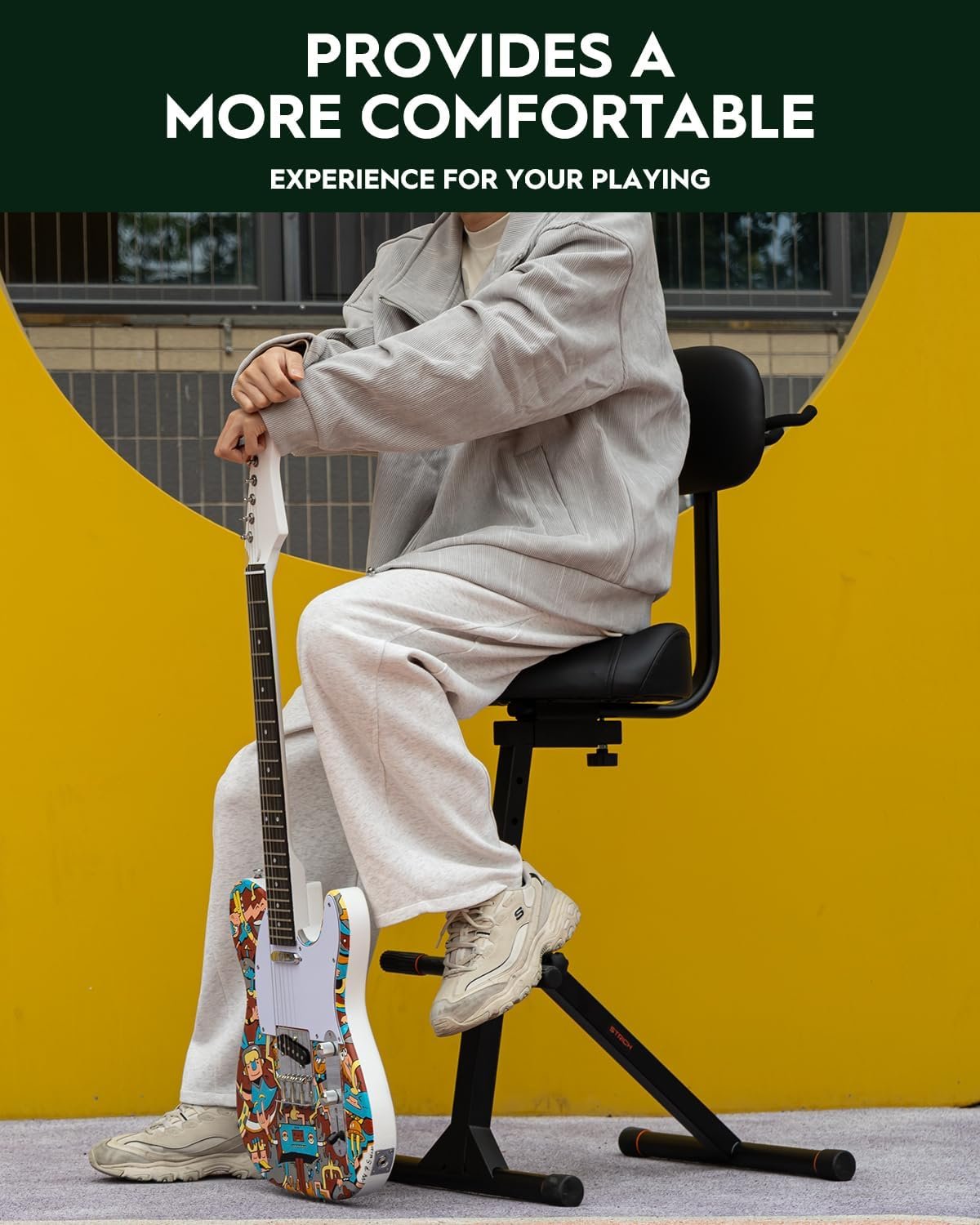
Why The Best Music Sessions Often Start Instantly
As an Amazon Associate, I earn from qualifying purchases.
Some musical moments are carefully planned.
Others arrive completely unannounced.
You walk into the room with no intention of practising.
Then you notice your guitar.
You sit down for a few minutes.
A melody appears.
A riff develops.
An unfinished idea suddenly starts making sense.
An hour later you’re wondering where the evening went.
Many musicians experience these moments, yet few stop to consider what made them possible.
Often, it isn’t inspiration alone.
It’s accessibility.
The easier it is to start playing, the more opportunities creativity has to show up.
Every Small Obstacle Adds Up
Most people think about barriers as large problems.
Lack of time.
Lack of motivation.
Lack of experience.
But smaller barriers often have a greater impact.
The guitar is across the room.
The chair isn’t comfortable.
The setup feels temporary.
Nothing is ready.
Individually these issues seem insignificant.
Collectively they create friction.
Friction doesn’t stop musicians completely.
It simply makes starting less likely.
One thing people often notice is that when a setup feels effortless, playing becomes a natural part of the day rather than a task that requires preparation.
The Hidden Value Of An Organised Setup
Home musicians often spend considerable time thinking about equipment.
Amplifiers.
Pedals.
Interfaces.
Instruments.
Yet organisation itself can be surprisingly influential.
An organised environment creates momentum.
Instead of spending energy setting things up, you spend energy making music.
This shift may seem subtle, but it changes the experience dramatically.
A dedicated playing space creates a sense of readiness.
The guitar feels available.
The seat feels familiar.
The environment quietly encourages action.
That’s often enough.
Why Creative Work Benefits From Simplicity
Creative work rarely follows a straight path.
Some sessions are productive.
Others are exploratory.
Many begin without a clear destination.
The more complicated the setup process becomes, the easier it is to postpone those spontaneous moments.
Many songwriters and hobby musicians eventually discover that simplicity supports creativity.
Not because simplicity is exciting.
Because it removes distractions.
A comfortable seat, easy instrument access, and a stable playing position create conditions where ideas can develop naturally.
The environment stops demanding attention.
The music receives it instead.
Music Happens Between The Plans
Some of the best musical ideas emerge between scheduled practice sessions.
A quick strum while passing through the room.
An unfinished melody before dinner.
A rhythm discovered during a quiet evening.
These moments rarely arrive with warning.
They simply happen.
Musicians who create environments that support these spontaneous experiences often find themselves playing more frequently.
Not because they’re forcing discipline.
Because the setup makes saying “yes” to music much easier.
Supporting Recording And Practice Equally
Modern musicians often move between different activities during a single session.
A few minutes of practice.
Some songwriting.
Perhaps a quick recording.
Maybe experimenting with arrangements.
A flexible setup supports this movement.
The goal isn’t building a professional studio.
The goal is creating an environment where different musical activities can happen naturally.
Comfort becomes important here.
Longer sessions feel easier when physical distractions remain in the background.
Focus stays where it belongs.
On the music.
Why Convenience Creates Consistency
Consistency often gets discussed as a matter of willpower.
While determination certainly matters, environment plays an important role too.
People repeat activities that feel easy to begin.
That’s true for exercise.
It’s true for reading.
And it’s true for music.
When the guitar is ready and the seating feels comfortable, practice requires less effort to initiate.
Many players find themselves picking up the instrument more often simply because everything is already prepared.
Over time, these extra sessions accumulate into meaningful progress.
Building A Space That Supports Flow
Musicians frequently talk about flow.
That feeling where concentration deepens and distractions disappear.
Flow isn’t something you can force.
But you can create conditions that encourage it.
Comfort helps.
Stability helps.
Organisation helps.
When your setup allows you to settle in quickly, reaching that focused state becomes easier.
Some instruments naturally encourage more playing time.
The same is true of certain environments.
The best setups quietly invite musicians to stay a little longer.
Home Studios Aren’t Just For Recording
The phrase “home studio” often sounds serious.
Rows of equipment.
Large desks.
Complex software.
For many musicians, however, a home studio is simply a space where music happens regularly.
A corner of a room.
A favourite chair.
A guitar nearby.
A place where ideas can be explored without interruption.
Creating that kind of environment doesn’t require endless equipment.
It requires intentionality.
The goal is making music feel accessible.
Why Comfort Influences Productivity
Productivity isn’t only about working harder.
Often it’s about removing obstacles.
A musician who remains comfortable is more likely to stay engaged.
A player who stays engaged is more likely to experiment.
Experimentation frequently leads to discovery.
Discovery keeps music interesting.
This cycle repeats itself over time.
Many players appreciate practical accessories not because they’re exciting, but because they quietly support that process day after day.
The Long-Term Benefits Of Reducing Friction
One of the most overlooked aspects of music making is sustainability.
Anyone can feel motivated for a week.
The challenge is maintaining enthusiasm over months and years.
Reducing friction helps.
An organised setup removes excuses.
Comfort supports longer sessions.
Convenience encourages spontaneous playing.
These benefits seem small individually.
Together, they create an environment that supports a long-term relationship with music.
Frequently Asked Questions
Can an organised setup improve practice habits?
Many musicians find it easier to practise consistently when their playing space feels ready and accessible.
Why is comfort important in a home studio?
Comfort helps reduce distractions and allows players to focus on creativity, learning, or recording.
Do I need a dedicated studio room?
Not at all. Many effective music spaces exist within bedrooms, home offices, or small corners of shared rooms.
Can a better setup encourage creativity?
While no setup creates ideas automatically, a comfortable environment often makes it easier to explore them.
Is this suitable for beginners?
Yes. Beginners often benefit from having a welcoming space that encourages regular playing.
Does convenience really matter?
Many players discover that reducing small obstacles makes a surprisingly large difference to how often they pick up their instrument.
A Practical Companion For Musicians
Music often thrives when the path between inspiration and action is short.
A well-organised playing space helps create that path.
Whether you’re practising scales, learning songs, recording ideas, or simply unwinding after a busy day, a comfortable and accessible setup can make the experience feel more natural.
The goal isn’t to create a perfect studio.
It’s to create a space where music happens more often.
And for many musicians, that simple change becomes one of the most valuable improvements they can make to their everyday playing routine.