Helping New Guitar Players Stay Motivated
Why New Players Often Quit Too Soon
As an Amazon Associate, I earn from qualifying purchases.
Learning guitar is exciting in the beginning.
You imagine playing favourite songs, impressing friends, writing music, or simply enjoying a new hobby.
Then reality arrives.
Finger soreness appears.
Chord changes feel awkward.
Practice sessions sometimes seem repetitive.
Progress feels slower than expected.
This is where many beginners face their biggest challenge.
Not learning chords.
Not understanding rhythm.
Simply staying motivated long enough to improve.
Most people who successfully learn guitar aren’t necessarily the most talented. They’re often the people who find ways to keep picking up the instrument week after week.
That consistency is where real progress begins.
Motivation Is Often About Removing Friction
When people think about motivation, they often imagine inspiration suddenly appearing.
In reality, motivation is frequently linked to convenience.
The easier something is to start, the more likely it is to happen.
Think about exercise.
A person with their running shoes already by the door is more likely to go for a run.
The same principle applies to guitar.
A guitar that feels clean, comfortable, and ready to play creates less resistance.
A neglected guitar can quietly create excuses.
Not because anything is seriously wrong with it.
Simply because it feels less inviting.
Many players discover that maintaining their instrument becomes one small way of making practice easier to start.
Creating Positive Associations With Practice
One of the biggest mistakes beginners make is treating practice like homework.
Every session becomes focused on mistakes.
Every challenge feels like evidence that progress isn’t happening.
Successful players often develop a different mindset.
They focus on enjoying the process.
Learning becomes something they look forward to rather than something they force themselves to do.
A guitar that feels good in your hands contributes to that experience.
Clean strings.
A tidy fretboard.
An instrument that looks cared for.
These details may seem small, but they can help create a more positive relationship with playing.
Enjoyment Comes Before Improvement
This surprises many beginners.
Most experienced players understand that enjoyment usually comes first.
The players who enjoy practising tend to practise more.
The players who practise more tend to improve.
The improvement is often a result of the enjoyment, not the other way around.
Why Small Wins Matter
Learning guitar is a long journey.
The challenge is that progress often happens slowly.
You may spend weeks learning basic chords.
Months improving rhythm.
Years refining technique.
That’s why small wins become so important.
Successfully playing a song.
Practising three days in a row.
Cleaning and organising your guitar setup.
These small achievements build momentum.
They create a sense of progress even when major breakthroughs haven’t arrived yet.
Many beginners underestimate how powerful momentum can be.
The Guitar Becomes Part Of Daily Life
The players who stick with guitar often reach a point where it stops feeling like a project.
It becomes part of their routine.
A few minutes before work.
A practice session after dinner.
A relaxed weekend afternoon learning something new.
The guitar simply becomes part of life.
Instrument care can support this transition.
Having a dedicated guitar cleaning kit nearby helps maintain an environment where the instrument always feels ready to play.
That readiness matters.
Because inspiration rarely arrives on a schedule.
Why A Well-Cared-For Guitar Feels Different
There is something satisfying about picking up an instrument that feels looked after.
Not because it is expensive.
Not because it is flawless.
Because it feels respected.
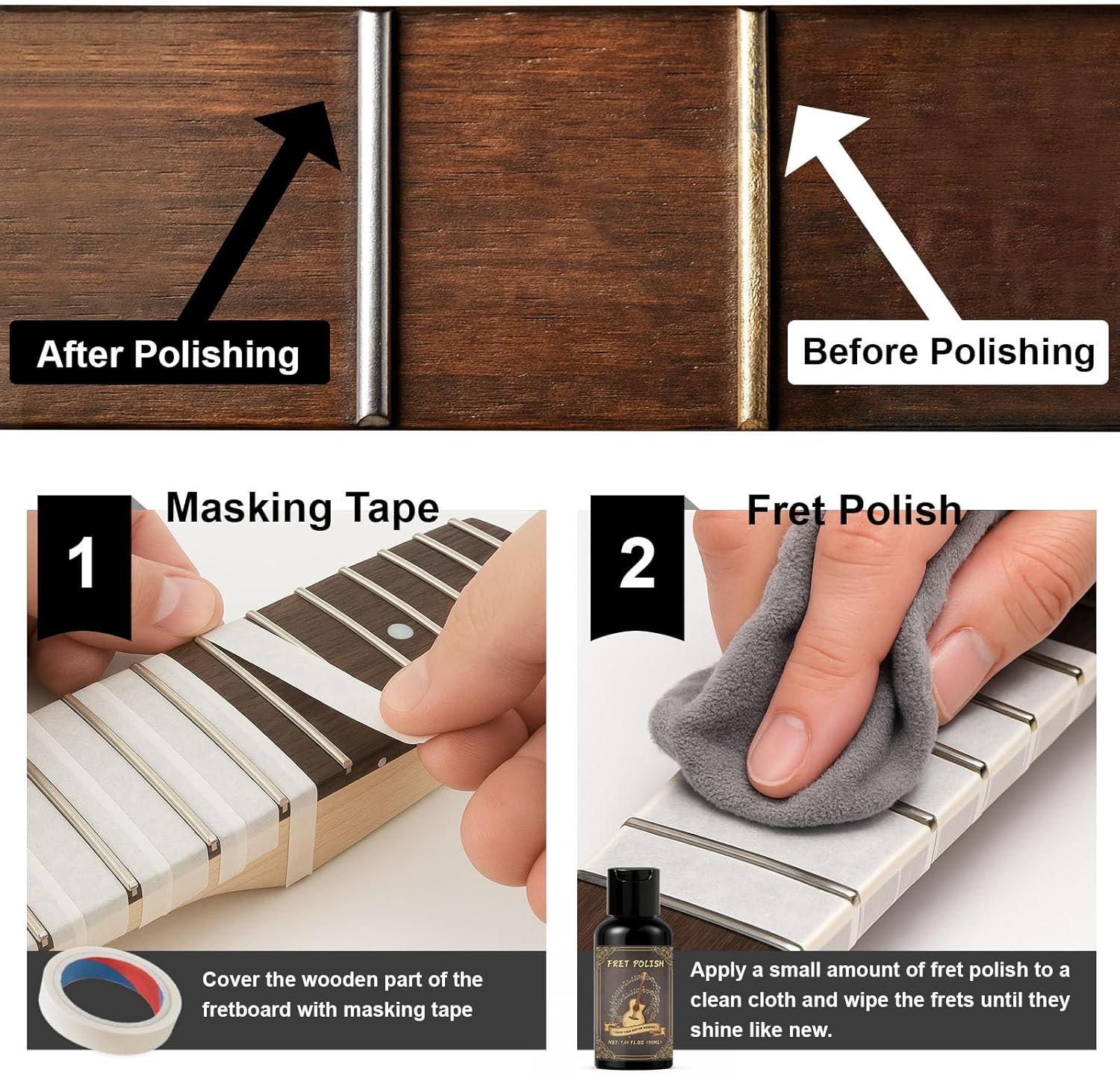
Many beginners are surprised by how much cleaner strings, polished frets, and a refreshed fretboard contribute to the overall playing experience.
The guitar feels more enjoyable.
More comfortable.
More inviting.
Those feelings often encourage longer and more frequent practice sessions.
Confidence Starts With Familiarity
The more time you spend with a guitar, the more familiar it becomes.
Maintenance helps strengthen that familiarity.
You become comfortable not only with playing the instrument but also with caring for it.
For beginners, this can make guitar ownership feel less intimidating.
Making Learning Feel Less Overwhelming
Many new players become overwhelmed because they focus on everything at once.
Chords.
Scales.
Theory.
Technique.
Songs.
Equipment.
The list feels endless.
A better approach is often simplicity.
Focus on today’s practice session.
Focus on one song.
Focus on one improvement.
The same principle applies to guitar care.
Simple routines are usually the most effective.
A quick wipe-down.
Occasional fretboard care.
Regular attention to strings.
Small actions are easier to maintain than complicated systems.
And habits that are easy to maintain tend to last.
Supporting Parents And Young Learners
Parents introducing children to guitar often face a unique challenge.
Children lose interest quickly when activities feel difficult or frustrating.
Creating a positive environment becomes essential.
A guitar that looks appealing and feels pleasant to use can contribute to that environment.
Many parents find that simple maintenance habits help children develop a stronger sense of ownership and responsibility toward their instrument.
The guitar becomes something they care about rather than simply something they use.
Building Habits That Last Years
Most successful guitar players share one characteristic.
They kept going.
They continued practising long enough for improvement to happen.
They found ways to make playing enjoyable enough to become a lasting habit.
The goal isn’t perfection.
It’s consistency.
Anything that supports consistency becomes valuable.
For many players, regular guitar care is one of those supporting habits.
Not because maintenance is exciting.
Because it helps create an instrument that people genuinely want to pick up.
More Than Just Cleaning
At first glance, a guitar cleaning kit might seem like a collection of maintenance products.
For many beginners, it becomes something slightly different.
A reminder that the instrument matters.
A tool that supports good ownership habits.
Part of a wider routine that encourages regular playing.
The real benefit isn’t necessarily a shinier guitar.
It’s helping create a guitar that feels ready whenever the next practice session begins.
FAQ
Is guitar maintenance important for beginners?
Yes. Learning basic care habits early can help new players feel more confident about owning and looking after their instrument.
Can a cleaner guitar encourage more practice?
Many players find that instruments which feel comfortable and well-maintained are more inviting to play regularly.
How often should a beginner clean their guitar?
Light cleaning can be performed regularly, while deeper maintenance can be done periodically depending on usage.
Does guitar care require technical knowledge?
Most basic maintenance tasks are straightforward and suitable for beginners.
Can guitar care become part of a practice routine?
Absolutely. Many players include simple maintenance habits alongside their regular playing sessions.
Is a guitar cleaning kit suitable for younger players?
Many families find that maintenance routines help children develop a sense of responsibility toward their instrument.
Why Some Beginners Keep Playing
The difference between players who quit and players who continue is often smaller than people imagine.
It’s rarely about talent.
It’s rarely about having the most expensive gear.
More often, it’s about creating an experience that feels enjoyable enough to return to repeatedly.
A guitar that feels clean, comfortable, and ready to play supports that experience.
For beginners, those small advantages can be surprisingly important.
Because every time the guitar feels inviting, there’s a better chance it gets picked up.
And every time it gets picked up, progress has an opportunity to happen.
Check It Out!