Yamaha Revstar Element RSE20 Electric Guitar
As an Amazon Associate I earn from qualifying purchases.
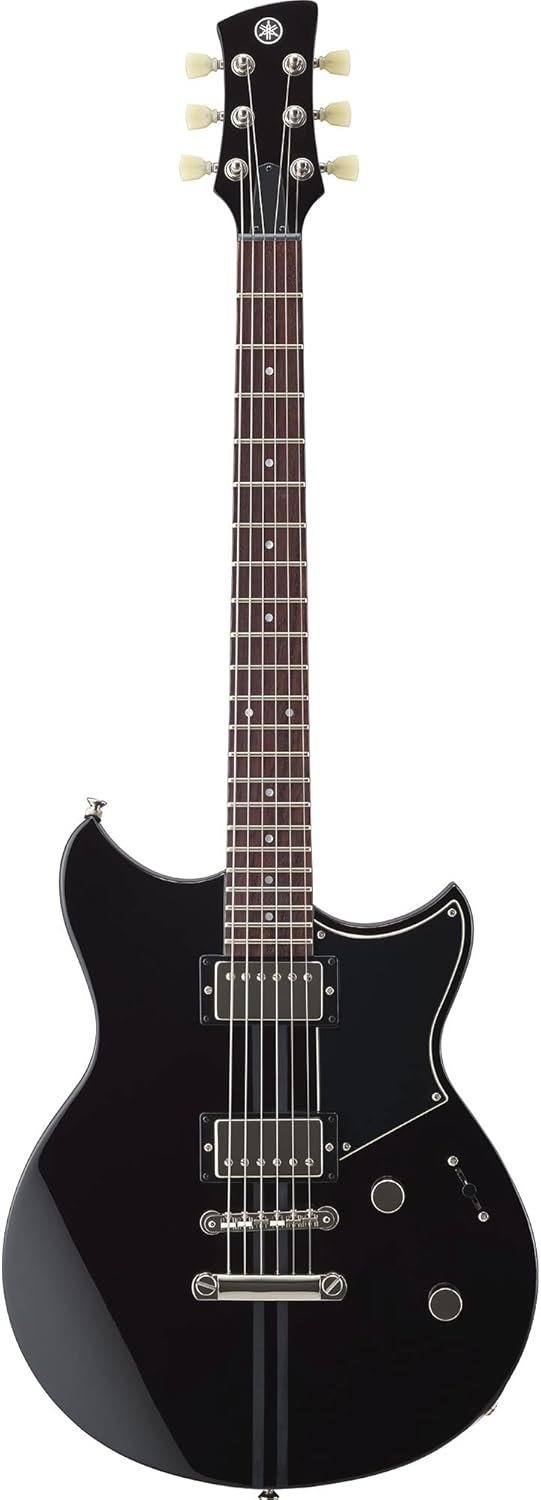
The Yamaha Revstar Element RSE20 Electric Guitar has a distinctive character before it is even plugged in.
Its rounded double-cutaway body, compact proportions and café-racer-inspired styling make it look different from the familiar shapes that dominate electric guitars. But underneath that appearance is a fairly straightforward guitar: a chambered mahogany body, set-in mahogany neck, two humbuckers, a three-way pickup selector and simple volume and tone controls.
Yamaha then adds one particularly useful twist — the Dry Switch, which brightens the sound without turning the humbuckers into conventional split-coil pickups.
Why the chambered body matters
The RSE20 uses a chambered mahogany body rather than a completely solid slab of wood.
Yamaha developed the Revstar chambering pattern to reduce weight while also influencing resonance and balance.
That gives the guitar a noticeably different feel from a heavy traditional single-cut electric.
There is still enough mass for the RSE20 to feel substantial against the body, but the chambering helps prevent it from becoming unnecessarily cumbersome during a longer practice session or rehearsal.
The body is finished in gloss polyurethane, while the neck uses a satin polyurethane finish.
That combination makes sense in use.
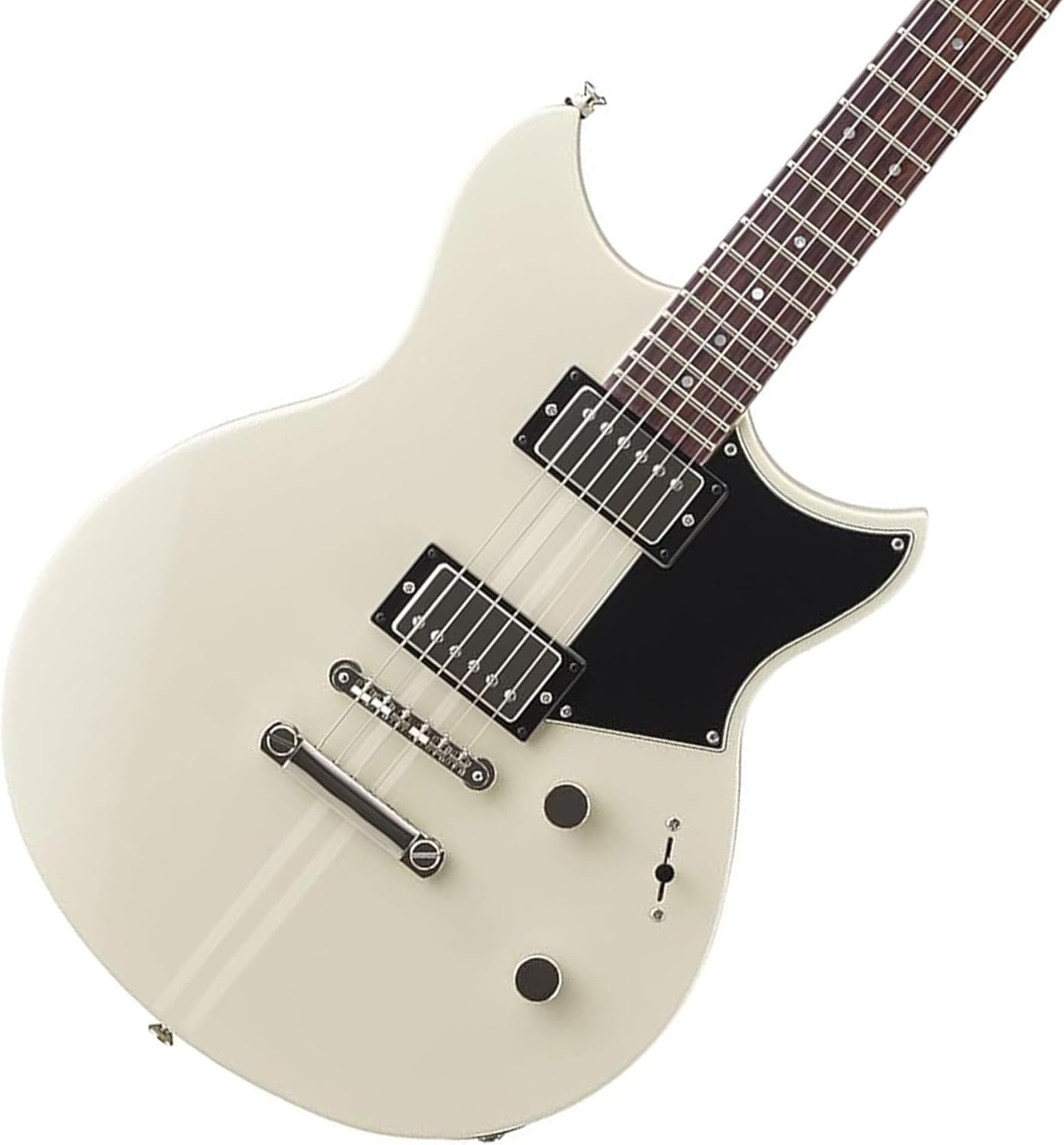
The gloss body gives the Vintage White finish a clean, polished appearance, while the satin neck offers a smoother surface for the fretting hand to move along.
It is the sort of detail that is easy to overlook in a specification list but much more noticeable after an hour of playing.
What it feels like to play
The RSE20 has a 24¾-inch scale length, which is slightly shorter than the 25½-inch scale found on many other electric guitars.
That shorter scale can give the strings a slightly softer feel at the same gauge and tuning.
Players who enjoy bends, vibrato and a little less resistance under the fingers may find that comfortable.
The neck is a three-piece mahogany design with a rosewood fingerboard, 12-inch radius and 22 jumbo frets.
The jumbo fretwire contributes to a modern playing feel because the fingers do not need to press all the way down against the fingerboard surface to get a clean note.
The 12-inch radius is also fairly flat compared with more traditionally curved vintage-style fingerboards, making it comfortable for chord work while still leaving room for bends higher up the neck.
Yamaha lists the neck thickness at approximately 21 mm at the first fret and 23.9 mm at the twelfth, so this is not an exceptionally thin neck but neither is it designed to feel oversized.
It should feel familiar to players who prefer a solid, comfortable neck rather than an extremely slim profile.
Two Alnico V humbuckers
The RSE20 uses Yamaha VH3 Alnico V humbuckers in both the neck and bridge positions.
The bridge pickup provides the more direct and aggressive voice.
It suits distorted rhythm playing, rock riffs and lead sounds where clarity and bite matter.
The neck pickup is naturally rounder and smoother.
That can work well for cleaner playing, bluesier lead tones and warmer rhythm parts.
The middle position combines both pickups, giving another useful tonal option without complicating the control layout.
There is one Master Volume, one Master Tone and a conventional three-position pickup selector.
For someone who wants to concentrate on playing rather than constantly adjusting four individual knobs, that simplicity is appealing.
The Dry Switch is more useful than it sounds
Pulling up the Tone control activates Yamaha’s Dry Switch high-pass filter.
This is not the same as a coil split.
A conventional coil split disables part of a humbucker to imitate a single-coil sound, which can reduce output and introduce more noise.
Yamaha’s Dry Switch instead filters out some of the lower frequencies while keeping the humbucker operating as a humbucker.
The result is a leaner, brighter sound without the same output drop or added hum associated with many coil-split arrangements.
That gives the RSE20 a surprisingly useful extra voice.
With the Dry Switch off, the guitar has the fuller character expected from humbuckers.
Pull it up and the sound becomes more open and less thick.
That can be useful for cleaner rhythm playing, funkier parts or situations where a dense humbucker sound needs to leave more room for the rest of a band.
A straightforward bridge and hardware setup
The RSE20 uses a Tune-O-Matic bridge with stopbar tailpiece and die-cast tuning machines.
This is a familiar, proven arrangement.
There is no tremolo system to set up, balance or maintain.
String changes remain straightforward, intonation can be adjusted at the bridge, and the guitar stays mechanically simple.
For players who rarely use a vibrato arm, that simplicity can be an advantage.
A fixed bridge also makes changing between standard tuning and modest alternate tunings easier than it can be with a floating tremolo system.
The guitar ships with .010–.046 Elixir Nanoweb strings, according to Yamaha’s current specification.
That gauge pairs naturally with the 24¾-inch scale and gives the guitar enough tension to feel controlled without becoming unnecessarily stiff.
A distinctive alternative to familiar designs
One of the biggest reasons to consider a Revstar is simply that it does not look like everything else.
The design was inspired by café-racer motorcycles, and Yamaha has carried that idea through the shape, finishes and restrained detailing of the series.
The Vintage White version has a particularly clean appearance.
The black pickguard and hardware details provide contrast without making the guitar look overly busy.
It feels modern but not futuristic.
There is enough vintage influence to make it familiar, yet it does not try to copy one of the traditional American electric-guitar shapes.
For a player who wants something recognisable without buying another version of the same old silhouette, the RSE20 has a strong identity.
The drawbacks
The RSE20’s simplicity will not suit everyone.
The first limitation is the three-way pickup switching.
You get neck, bridge or both pickups together.
That is perfectly adequate for many guitarists, but the more expensive Revstar Standard and Professional models offer more elaborate switching systems and broader tonal options.
If you enjoy guitars with five-way selectors, series and parallel combinations or extensive coil switching, the Element model is deliberately more straightforward.
The Dry Switch does add useful variety, but it is still only one additional tonal tool.
It should not be mistaken for a full single-coil mode.
If you want the sharply defined character of genuine single-coil pickups, the RSE20’s filtered humbucker sound will not completely replace them.
The fixed bridge is another advantage that can also become a limitation.
There is no tremolo arm.
Players who regularly use subtle vibrato, dive effects or expressive pitch movement will need to look elsewhere or accept that those techniques are not part of this guitar’s design.
The RSE20 also does not include a case or gig bag according to Yamaha’s specification.
That is worth knowing if the guitar will be transported regularly.
A suitable case or bag becomes an additional piece of equipment rather than something already supplied with the instrument.
The chambered body reduces weight and changes resonance, but it also means the RSE20 does not feel exactly like a completely solid mahogany electric.
Some players specifically enjoy the dense, heavy feel of a traditional solid-body design.
The Revstar is intentionally different.
Its chambering and compact outline make it more comfortable for many players, but someone who equates substantial weight with the physical feel they want from an electric guitar may prefer something more conventional.
The 24¾-inch scale also creates a preference issue.
It can make bends and fretting feel a little easier, but players accustomed to the firmer response of a 25½-inch scale may initially find the strings slightly softer.
That is neither better nor worse.
It simply changes the way the instrument responds beneath the fingers.
The jumbo frets can produce a similar reaction.
Players who like modern fretwork often appreciate the easier bending and lighter touch.
Someone used to very low vintage-style frets may initially feel as though the strings sit farther away from the fingerboard.
The pickups are versatile within the humbucker family, but the RSE20 is still fundamentally a dual-humbucker guitar.
If your music depends heavily on the bright, percussive attack of traditional single coils, this may not be the natural first choice.
Likewise, players chasing very high-output modern metal tones may eventually want hotter pickups or additional gain from pedals and amplification.
The RSE20 sits more comfortably in the broad middle ground of rock, blues, alternative, indie, pop and general-purpose electric playing.
There is also a distinction between the Element model and the more expensive Revstar tiers.
The RSE20 uses a chambered mahogany body and three-piece mahogany neck, but it does not have the maple top, carbon reinforcement, five-way switching or Focus Switch found on the Standard models.
That is not a criticism of the Element.
It is simply important not to assume that every feature associated with the wider Revstar family is present on this particular guitar.
The RSE20 is the simpler version of the idea.
For many players, that simplicity may actually be preferable.
Who it suits best
The Yamaha Revstar Element RSE20 should appeal to guitarists who want a versatile humbucker-equipped electric without buying something that looks like every other guitar on the wall.
Its shorter scale and chambered body make it particularly appealing for players who value comfort.
The simple controls should suit beginners who do not want to be overwhelmed, while the Dry Switch gives more experienced players an additional practical tone without introducing complicated electronics.
It is also a strong option for rock, blues, indie and alternative players who want warm humbucker tones but still need the ability to brighten the sound when a mix becomes crowded.
And for somebody who already owns a familiar Strat-style or single-cut guitar, the RSE20 offers a genuinely different second instrument rather than a minor variation of what is already there.
Is it worth the guitar space?
The Yamaha Revstar Element RSE20 works because it keeps the important parts relatively simple.
You get a chambered mahogany body, set-in three-piece mahogany neck, rosewood fingerboard, 24¾-inch scale, two Alnico V humbuckers and a conventional fixed bridge.
The Dry Switch adds another useful tonal direction without turning the control panel into a puzzle.
Its limitations are equally clear.
There is no tremolo, the pickup switching is straightforward, no gig bag is included, and players wanting the more advanced Revstar electronics will need to look higher up the range.
But those compromises leave the RSE20 with a clear identity.
It is comfortable, distinctive and versatile without trying to become every type of electric guitar at once.
For a player who wants a modern Yamaha design with familiar controls and enough tonal flexibility to cover a wide range of everyday playing, the Revstar Element RSE20 makes a convincing case for earning its place on the guitar stand.
Explore more guitars in our Electric Guitars section.
As an Amazon Associate I earn from qualifying purchases.