When Practice Feels Like Play
Amazon Associate Disclaimer
As an Amazon Associate, we may earn from qualifying purchases. This comes at no extra cost to you and helps support our website.
The Quiet Shift in Home Playing
There is a moment every guitarist knows. The house is finally quiet. Everyone else is asleep or out, and you have maybe forty minutes before real life interrupts again. You want to play. You need to play. But the thought of setting up a pedalboard, waiting for tubes to warm up, or dragging out an interface just to hear yourself with a decent tone feels exhausting.
Something has been changing quietly in the practice amplifier world. For years, the conversation was about making small amps louder or cramming more effects into a box. But lately, a few interesting designs have started asking a different question. Not how much can we pack in, but how quickly can we remove the friction between having an idea and hearing it sound good?
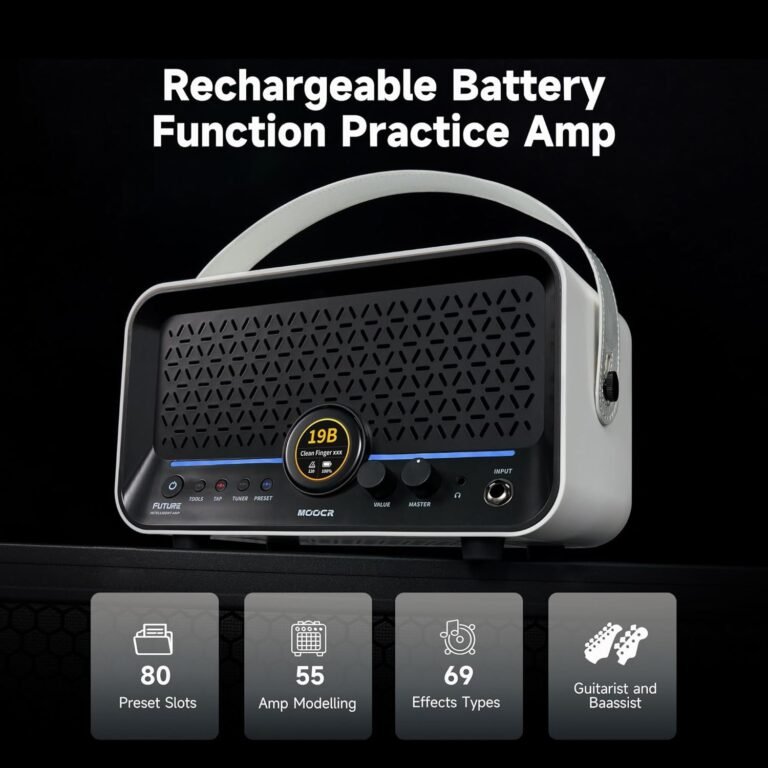
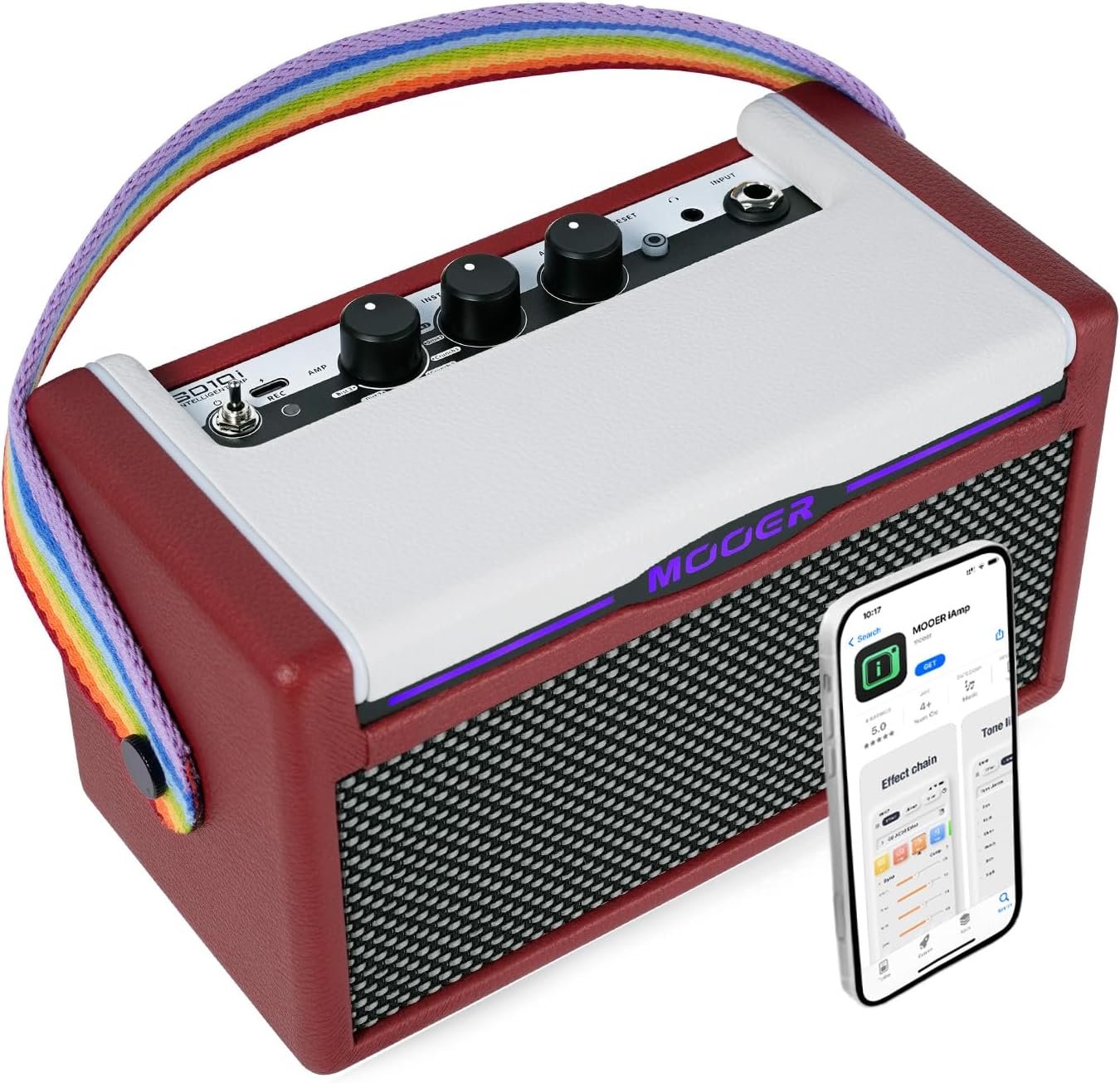
The MOOER SD10i sits squarely in that new territory. A portable stereo guitar amplifier with a rechargeable battery and an unusual approach to finding tones, it represents a shift in thinking about what a practice amp can be. Not louder, not more complicated, just more immediate.
What makes it worth talking about is not any single specification. It is the way the pieces fit together around a central idea. The idea that practice should feel less like work and more like the reason you picked up a guitar in the first place.
Tone Hunting Without the Menu Diving
Most modeling amplifiers ask you to learn their system. You scroll through banks, memorize preset numbers, or connect to an app and tap through menus until you find something close. It works, but it takes you out of the playing headspace and into a programming headspace. For some guitarists, that is fine. For others, it slowly becomes a reason to leave the amp off and just play unplugged.
The SD10i takes a different approach. There is an AI chat function built into the amp that accesses a database of over ten thousand effects configurations. You describe what you want, either by typing or speaking. A song title, a guitarist name, a genre, a mood. The system generates three preset tones for you to preview. If none of them fit, you keep refining the conversation, and it keeps generating options. Once you find something you like, you download it to the amp and get on with playing.
This might sound like a gimmick until you use it for the first time. You think of a sound in your head. The clean arpeggiated wash from a specific recording, or the throaty overdrive of a player you admire. You describe it, and within seconds you are previewing something close. You are not scrolling through fifty-two amp models and forty-nine effects manually. You are just moving toward the sound you already hear internally.
The practical benefit is not the technology itself. It is the continuity it preserves. You stay in a creative mindset because the tool meets you where you are rather than demanding you learn its internal logic first. That matters more than most specification sheets suggest.
Stereo Sound in a Small Frame
Practice amplifiers have historically been mono, often with a single speaker that beams sound directionally. It works for hearing notes, but it rarely feels immersive. The SD10i uses two four-inch speakers in a stereo configuration, powered by ten watts total. It is not loud enough to compete with a drummer, and it is not trying to be. It is designed for bedroom playing, living room sessions, and patios. Spaces where stereo separation actually reaches your ears.
There is something genuinely pleasant about hearing delay repeats ping-pong across two speakers while you play alone. Modulation effects feel wider. Reverb breathes more naturally. Even clean tones gain a sense of space that a single speaker cannot provide. It makes practice feel less utilitarian and more like a miniature listening experience.
A sealed subwoofer helps round out the low end. This is a thoughtful addition because small speakers often thin out the bass frequencies that make guitar feel substantial. The amp handles backing tracks and Bluetooth audio playback well, so you can play along with songs and actually hear both the track and your guitar clearly. That is a simple thing that many practice amplifiers get wrong.
The Backing Band That Lives Inside
Practicing alone can become repetitive. Metronomes are necessary but mechanical. Drum machines help, but many built into amplifiers feel like an afterthought, with a handful of patterns and no real sense of groove. The SD10i includes forty drum machine rhythms with tempo control and ten metronome settings. That is enough variety to keep timing practice from becoming stale.
More useful still is the eighty-second looper. For guitarists working on improvisation, chord melody, or layering parts, a looper transforms solitary practice into something closer to playing with another person. You lay down a progression, and suddenly you are free to explore melodies over it. You hear your phrasing differently. You notice where time drifts. You develop a better sense of how your lines sit in a harmonic context.
These features are not revolutionary on their own. Loopers and drum machines have existed for decades. What matters is having them integrated into the same portable unit you are already using for tone. There is no extra pedal to connect, no cable to find, no battery to check. You have an idea for a loop, and you build it immediately. That convenience is the quiet engine of consistent practice.
Late Night Sessions and Silent Stages
Headphone output is one of those features that seems minor until you need it. For apartment dwellers, parents with sleeping children, or anyone who does their best playing after eleven at night, a headphone jack is non-negotiable. The SD10i supports silent practice through headphones, and the stereo processing translates well to headphones, which is not always true of mono amplifiers with a headphone out.
USB-C connectivity adds another practical layer. You can connect directly to a phone for OTG recording, capturing audio and video simultaneously. This turns the amp into a straightforward recording interface for quick ideas, practice clips, or social media content. No separate audio interface is required, no microphone positioning is necessary, and no room treatment matters. Just plug in and capture what you are playing.
For guitarists who document their progress or share clips with friends and teachers, this direct recording path removes significant friction. The moments of inspiration do not get lost while you set up gear. They get captured while they are happening.
Wireless Freedom and Real Portability
Cables are one of those annoyances that accumulate. A power cable, an instrument cable, a phone cable for backing tracks. Soon your practice corner looks like a wiring closet. The SD10i runs on an internal rechargeable battery rated for over five hours of use. That is enough for several practice sessions between charges, or an entire afternoon at a park, a friend’s house, or a small gathering.
The compact size and removable carrying handle mean it genuinely fits into a backpack. It weighs around four pounds. It is not competing with a full-sized combo amp for stage volume, but it is not supposed to. It competes with the convenience of playing unplugged, and it wins because it gives you full tone and effects without anchoring you to an outlet.
Wireless footswitch control is also supported through the MOOER F4 wireless footswitch. That means you can control the looper, switch presets, or trigger the drum machine from across the room without running a cable. For a home setup where the amp might sit on a shelf or across the room, that is a genuine quality-of-life improvement.
A Light Show That Is Completely Unnecessary and Strangely Enjoyable
There is an LED light strip along the front that supports nine colors and two modes, breathing or constant, adjustable through the app. This is not a feature that affects tone or playing. It does not make you a better guitarist. It is purely aesthetic, and that is fine.
Sometimes small pleasures matter. A soft blue glow during a late-night ambient session. A warm amber light while working through jazz chords on a winter evening. The music and lights are yours to set. It is a small touch that makes the space feel more intentional. Not a reason to choose the amp, but a detail that makes the experience slightly more enjoyable once you own it.
Who This Fits Naturally
This amplifier makes sense for the guitarist who practices in a living space rather than a dedicated studio. Someone whose gear needs to coexist with daily life. It fits the musician who steals practice time in small windows, late at night, or in different rooms depending on who else is home.
It also suits the player who has grown tired of menu diving but still wants access to a wide palette of sounds. The AI tone search removes the barrier between wanting a sound and hearing it. That is not about laziness. It is about preserving creative momentum.
Traveling guitarists will appreciate the battery life and backpack-friendly size. Someone visiting family for a week, staying in a hotel, or heading to a low-volume jam can bring full stereo tone with them without hauling a traditional amp.
Songwriters who work quickly will find the integrated looper and drum machine useful for capturing ideas before they evaporate. The direct USB recording makes it easy to document those moments for later development.
It is not a stage amp. It is not a studio reference monitor. It is not pretending to replace either. It is a practice amplifier that has been thoughtfully designed around how many guitarists actually live and play. That honesty is refreshing.
The Unhurried Approach to Gear
There is a particular satisfaction in gear that does not demand attention. It sits ready on a shelf or table. You pick up your guitar, turn one knob, and you are playing with a sound you enjoy. No boot-up sequence. No complicated signal chain. No waiting.
The best practice tools fade into the background and let you focus on the music. The SD10i seems built around that philosophy. The AI tone searching, the stereo speakers, the wireless connectivity, and the integrated practice tools all serve the same purpose. Getting you from silence to meaningful playing with as little friction as possible.
That is worth something, especially for the guitarist whose practice time is already squeezed by work, family, and life obligations. When the window to play opens, you do not want to spend half of it setting up. You want to play.
The industry has spent decades making amplifiers louder, more powerful, and more complex. There is something quietly encouraging about seeing attention turn toward making them more livable. More suited to the rooms where most guitar playing actually happens. More respectful of the fact that the person holding the guitar just wants to make music, not operate equipment.
If that sounds like your situation, a portable AI practice guitar amplifier that prioritizes immediacy and feel over sheer volume might be exactly the right fit. Not because it promises to change your playing overnight, but because it makes it easier to play at all. And ultimately, that is what keeps us coming back.
Check It Out!