Gamechanger Audio PLASMA Distortion Pedal
As an Amazon Associate, I earn from qualifying purchases.
The Gamechanger Audio PLASMA Distortion Pedal challenges the familiar approach to creating distorted electric guitar sounds.
Most guitarists have probably experimented with overdrive, distortion or fuzz at some point. These effects have become such an established part of electric guitar playing that discovering something genuinely different can be quite refreshing.
Gamechanger Audio, a manufacturer from Latvia, has approached distortion from an unusual technological direction. Instead of relying entirely on conventional clipping circuits, the company uses electrical discharges within a sealed xenon-filled tube.
The result is an effect that encourages guitarists to explore unfamiliar sounds rather than continually attempting to recreate traditional amplifier distortion.
But does musical experimentation justify introducing such an unconventional pedal into your guitar setup?
A Different Approach to Guitar Distortion
Traditional distortion pedals generally follow familiar electronic principles, even when their individual components and tonal characteristics differ.
The Gamechanger Audio PLASMA Distortion Pedal takes a considerably different approach.
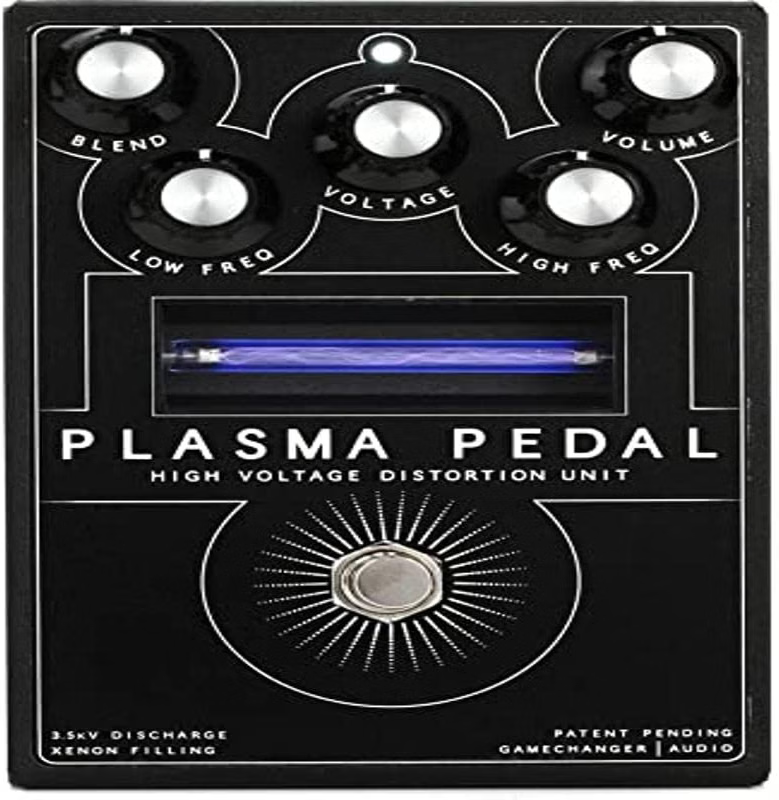
Its circuitry converts the incoming instrument signal into high-voltage electrical discharges inside a specially designed xenon tube.
These discharges are then converted back into an audio signal.
The illuminated tube visible through the front of the pedal is therefore a functional part of the technology rather than simply a decorative lighting feature.
This unusual process introduces aggressive distortion characteristics and abrupt changes in the way notes decay.
For guitarists who have become accustomed to conventional distortion, exploring this different response could encourage new approaches to playing.
Finding Your Own Musical Identity
Many guitarists spend years attempting to reproduce the sounds of their favorite musicians.
There is nothing wrong with that. Learning how familiar sounds are created can provide a useful understanding of guitar equipment.
However, there comes a point when some players want to discover something more individual.
The PLASMA Pedal could appeal to musicians who are less interested in recreating established guitar tones and more interested in developing their own.
Its unconventional distortion characteristics could influence how you approach riffs, melodies and arrangements.
A simple sequence of notes might become the starting point for something that would not have occurred to you when using a familiar overdrive pedal.
Rather than treating the effect as something that merely changes your guitar tone, you could begin using it as part of the composition itself.
That possibility makes unusual musical equipment particularly interesting.
Exploring the Space Between Notes
Distortion is often associated with sustain. Guitarists frequently use it to extend notes and produce fuller, more powerful sounds.
The PLASMA Pedal introduces another consideration through its voltage control.
Adjusting this control changes the threshold at which electrical discharge occurs inside the tube.
Depending on the settings and incoming signal, quieter notes can cut off abruptly rather than fading in the familiar way.
This characteristic could become an interesting musical tool.
Imagine developing a rhythmic guitar passage where the spaces between notes are just as important as the notes themselves.
Short bursts of distorted sound could provide a contrast against drums, bass or electronic instruments.
For musicians interested in industrial rock, experimental music or unconventional metal arrangements, these possibilities could be particularly appealing.
Combining Clean and Distorted Guitar Sounds
Heavy distortion can sometimes overwhelm the natural character of an instrument.
Complex chords may become difficult to distinguish, while individual picking movements can lose some of their definition.
The PLASMA Pedal includes a blend control that allows the original instrument signal to be combined with the processed sound.
This provides another direction for musical experimentation.
Rather than committing entirely to the distorted signal, you could retain some of the original guitar character while introducing the more aggressive effect alongside it.
For recording musicians, this could provide interesting opportunities to develop layered sounds without necessarily recording several separate guitar tracks.
It might also appeal to bass players who want to introduce distortion while retaining some definition in their original signal.
The balance between these sounds becomes another creative decision rather than something determined entirely by the pedal’s distortion circuit.
Shaping the Sound Around Your Equipment
Every guitar setup is different.
Pickup selection, amplifier characteristics, speaker design and other effects all influence the final sound.
The PLASMA Pedal includes controls for adjusting low and high frequencies, allowing players to shape its output around their existing equipment.
This becomes particularly important when working with aggressive distortion.
Too much low-frequency content can make guitar arrangements difficult to distinguish, particularly when playing alongside a bass guitarist.
Excessive upper frequencies might become uncomfortable when reproduced through certain amplifiers or recording systems.
Our discussion of the BOSS EQ-200 Graphic Equalizer explores another approach to controlling the frequency balance of guitar sounds.
Understanding how different frequencies interact could help you make more thoughtful decisions when experimenting with unconventional distortion.
Introducing Contrast Into Your Music
A powerful guitar sound does not necessarily need to dominate an entire song.
Sometimes, its greatest impact comes from appearing unexpectedly.
A relatively clean introduction could develop into a distorted passage that sounds dramatically different from everything preceding it.
Alternatively, an unusual distortion texture might appear briefly between more traditional guitar sections.
The PLASMA Pedal could become particularly interesting when used in this way.
Its distinctive character offers an opportunity to introduce contrast rather than simply adding more distortion to an already heavily processed sound.
Home recording musicians might also experiment with incorporating short distorted passages into arrangements that otherwise rely on cleaner instruments.
The objective does not have to be creating the heaviest possible guitar sound. It could simply be discovering something that makes a particular musical passage more memorable.
Combining Unusual Guitar Technologies
There are many ways to move beyond conventional guitar playing without changing the instrument itself.
Our article discussing the EBow Plus Electronic Guitar Bow explores how electromagnetic technology can sustain individual guitar strings.
Combining sustained notes with unconventional distortion could introduce interesting possibilities for atmospheric compositions and experimental recordings.
Other effects, including delay and reverb, might provide additional space around short, aggressive bursts of sound.
These combinations are worth exploring because unusual guitar equipment often becomes more interesting when considered as part of a wider musical arrangement.
However, adding numerous effects does not automatically improve the result.
Sometimes, using one distinctive effect carefully can contribute more to a composition than combining several competing sounds.
Why You Might Decide Not to Buy the Gamechanger Audio PLASMA Distortion Pedal
Although its technology offers interesting creative possibilities, there are several reasons why the PLASMA Pedal might not suit your musical requirements.
Understanding these limitations is particularly important when considering specialized equipment rather than a general-purpose guitar effect.
It May Be Too Aggressive for Your Musical Style
The distinctive character of this pedal is also one of its biggest potential disadvantages.
Someone who mainly plays blues, traditional rock or gentle instrumental music might prefer distortion that responds more naturally to their picking dynamics.
A conventional overdrive pedal could provide the warmth and gradual breakup they are looking for.
The abrupt, aggressive characteristics associated with plasma distortion might feel unnecessarily intrusive within those musical styles.
Even guitarists who enjoy heavier music may discover that they prefer a more familiar distortion response.
Choosing an unusual effect simply because its technology sounds interesting does not guarantee that it will complement the music you actually enjoy playing.
Abrupt Note Decay Can Become Frustrating
The ability to produce sharply interrupted distorted sounds can be creatively useful.
However, it may become frustrating when you want notes to sustain naturally.
Depending on the voltage setting and signal strength, quieter passages may disappear sooner than expected.
This could interfere with expressive guitar techniques that depend on subtle changes in picking strength or gradually fading notes.
Guitarists accustomed to controlling distortion through their instrument’s volume knob may also need to reconsider how they approach certain passages.
Learning to work with these characteristics takes time.
If you primarily want a distortion pedal that behaves predictably across a wide range of traditional playing techniques, this particular design might introduce unnecessary complications.
The Financial Commitment Is Considerable
Unconventional musical technology often involves a greater financial commitment than more familiar equipment.
The PLASMA Pedal’s specialized circuitry and xenon discharge system distinguish it from many ordinary distortion pedals.
Nevertheless, the important question is whether those differences would make a meaningful contribution to your music.
A guitarist who only occasionally experiments with aggressive distortion might find that a simpler fuzz pedal provides sufficient creative possibilities.
Our discussion of the Joyo Octave Fuzz Pedal illustrates another way to explore unconventional distorted guitar textures.
Although the two pedals operate differently, both encourage musicians to move beyond familiar overdrive sounds.
Spending more on unusual technology makes greater sense when you have a genuine musical application for it.
It Could Become Difficult to Place Within a Band Mix
A guitar sound that appears exciting when playing alone does not necessarily work equally well alongside other musicians.
Aggressive distortion can compete with cymbals, bass frequencies and other amplified instruments.
The unusual harmonic characteristics of plasma distortion may require additional attention when adjusting your guitar sound for rehearsals or performances.
You might discover that settings which sound interesting at home need considerable adjustment when playing with a band.
This is not necessarily a fault with the equipment. It reflects the different requirements of individual practice and collective music-making.
Nevertheless, guitarists who need straightforward, dependable sounds for numerous musical styles might prefer something more conventional.
Specialized Technology Introduces Maintenance Considerations
The xenon discharge tube is an essential component of the pedal’s operation.
Unlike a conventional distortion circuit, this introduces specialized hardware that could require manufacturer support if problems develop.
Although the manufacturer describes the tube as having a long expected operating life, no electronic equipment is completely immune to failure.
The internal high-voltage circuitry also means that this is not something owners should attempt to modify or repair themselves.
Anyone who prefers simple equipment that can be maintained easily over many years should consider whether this additional technological complexity matters to them.
Appropriate power arrangements and adherence to the manufacturer’s operating instructions are also important.
The Novelty Might Eventually Wear Off
There is something visually fascinating about seeing electrical discharges respond to guitar playing.
However, the visual attraction of musical equipment should remain secondary to its practical usefulness.
After several weeks of experimenting, you might discover that the pedal’s distinctive sound only suits a handful of musical ideas.
If your existing distortion pedals already provide most of the sounds you regularly need, the PLASMA Pedal could gradually become something you use only on rare occasions.
Before introducing another specialized effect into your collection, consider whether it addresses a musical limitation you have actually encountered.
Buying something because it is different is understandable, but that difference needs to remain interesting after the initial excitement has disappeared.
Does Unconventional Distortion Have a Place in Your Music?
The Gamechanger Audio PLASMA Distortion Pedal raises an interesting question about the relationship between musical technology and creativity.
Should guitar equipment help musicians reproduce familiar sounds, or should it encourage them to discover entirely different ones?
There is room for both approaches.
For guitarists who enjoy experimenting, composing unusual music and exploring unfamiliar textures, plasma distortion could introduce another dimension to their playing.
For musicians who value traditional responsiveness, familiar tones and straightforward equipment, its specialized characteristics might offer relatively little practical benefit.
There are many different ways to develop an individual guitar sound throughout our Effects & Pedals category.
Perhaps the most important consideration is whether this particular technology would encourage you to create music that you would not otherwise have considered.
If it would, its unconventional design has a genuine musical purpose.
If not, there is no need to replace equipment that already allows you to express yourself comfortably.
Being different as a guitarist does not necessarily mean owning different equipment. It means discovering your own way of making music.
As an Amazon Associate, I earn from qualifying purchases.
Opens Amazon (paid link)