Amazon Associate Disclaimer: As an Amazon Associate, we may earn from qualifying purchases. This comes at no extra cost to you and helps support our website.
Getting the Rehearsal Room Sound Right
A rehearsal space rarely comes with good acoustics built in. Concrete walls, low ceilings, borrowed gear — you work with what’s there and shape the sound yourself. That shaping starts with something steady enough to carry a guitar, a vocal, and a backing track without falling apart the moment more than one person plugs in at once.
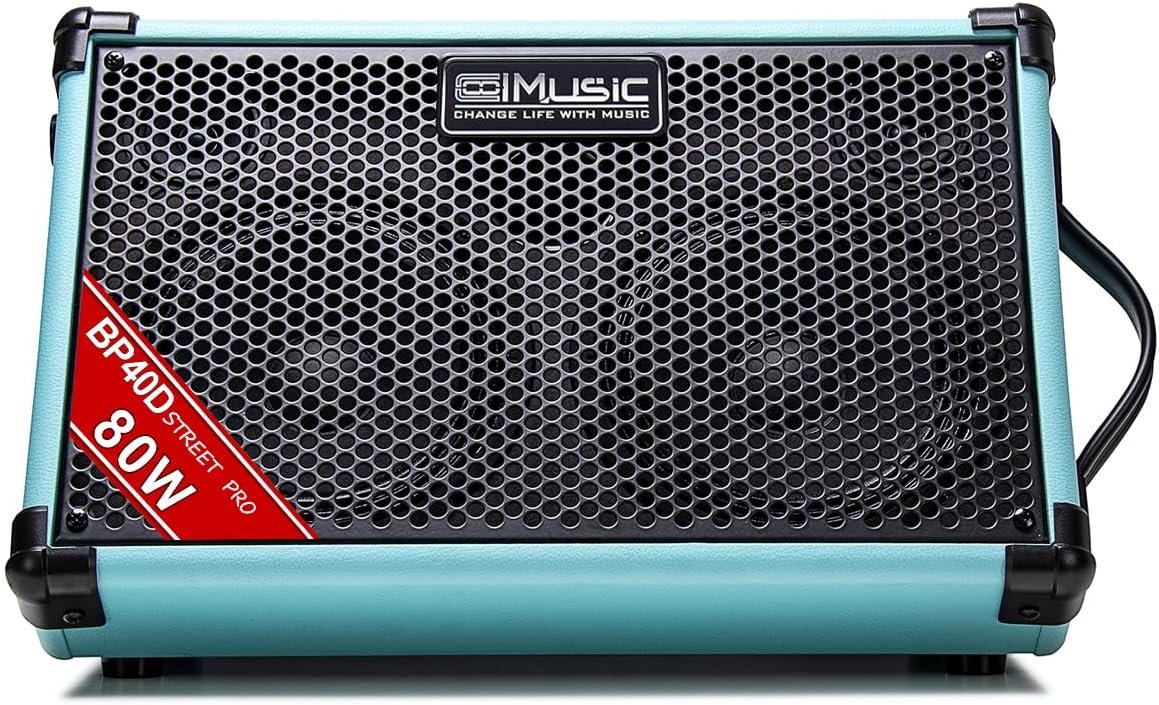
A powered acoustic amplifier built around several inputs changes how a rehearsal actually runs. Separate instrument and microphone channels mean a duo can plug in side by side instead of trading a single input back and forth. One guitarist works out a chord voicing while the other layers a vocal harmony on top, and both signals sit in the mix without one drowning out the other. That kind of setup turns a rehearsal from a scheduling puzzle into an actual session.
Shaping Tone Before the Set Even Starts
Multi-band EQ on each channel gives a player room to adjust before the first song starts, not during it. Low end gets tightened so a dreadnought doesn’t boom in a small room. Mids get pushed forward when a vocal needs to cut through a busier arrangement. Highs get eased back when a condenser mic picks up more sibilance than the room can handle. None of this requires outboard gear — it’s built into the channel strip, which matters when rehearsal time is short and nobody wants to spend the first stretch chasing a clean signal.
The onboard reverb, chorus, and delay give a guitarist a way to test textures without wiring in a pedalboard. A dry rhythm part can get a touch of reverb to see how it sits against a vocal. A lead line can run through delay to check phrasing before committing to it in front of a full band. These aren’t studio effects meant to define a final sound — they’re rehearsal tools, there so a player can hear an idea out loud instead of just imagining it.
Backing Tracks Without the Extra Gear
Bluetooth connectivity turns a phone or laptop into a backing track source without another cable running across the floor. A drummer running a click track, a duo working against a pre-recorded rhythm section, or a solo player practicing over a full arrangement — all of it streams in cleanly through the same system carrying the live instruments. That’s one less piece of gear to haul in, and one less connection to troubleshoot when rehearsal time is already limited.
The Play/Pause and track-skip controls sitting right on the unit mean a player doesn’t need to stop and reach for a phone mid-run to restart a section. A verse gets replayed, a bridge gets isolated, a whole arrangement gets looped — all handled at the amp itself, which keeps hands closer to the instrument and attention closer to the music.
Recording the Idea Before It’s Gone
A phrase worked out mid-rehearsal has a short shelf life if it isn’t captured. The internal recording line connects directly to a phone, so a run-through gets documented the moment it happens rather than reconstructed later from memory. That matters more for songwriting than most people expect — the version played during a loose rehearsal often sounds different from the version replayed the next morning after everyone’s had time to overthink it.
The same connection supports live streaming a rehearsal or a small home session to platforms where a band already has an audience. Phantom power on the microphone input means a condenser mic can be used for vocals without needing a separate power source, which opens up a cleaner vocal capture than most rehearsal setups manage on their own.
Working Around a Room That Isn’t Soundproofed
Not every rehearsal happens in a space built for volume. A built-in mute function lets a player work out parts quietly at night without disturbing anyone nearby, which keeps a late-evening session from becoming a compromise between finishing an idea and respecting a neighbor’s sleep schedule. That’s a small feature with a real effect on how often a player actually sits down and works through material instead of putting it off until daylight hours line up.
Staying Powered Through a Full Session
A rehearsal shouldn’t stop because the room doesn’t have a convenient outlet. With a solid stretch of battery life on a modest charge, this amplifier keeps running through a full rehearsal block, a backyard session, or an outdoor acoustic set without needing to stay tethered to a wall. When power is available, the direct electrical connection keeps things running indefinitely, so the battery becomes a backup rather than a limitation.
That flexibility matters for anyone rehearsing across different spaces — a garage one week, a friend’s living room the next, an outdoor gathering after that. The amp adapts to wherever the rehearsal happens to land instead of dictating where it has to happen.
Fitting Into a Band’s Actual Routine
None of this requires a rehearsal space to be reorganized around the gear. The unit’s range of inputs means a full arrangement — instruments, vocal mics, and a phone or laptop for backing tracks — runs through one compact system instead of a rack of separate pieces. For a duo working out harmony parts, that’s plenty of headroom left over. For a trio or small band, it’s enough to get a full run-through without anyone waiting for an open channel.
Whether the goal is tightening a set before a show, working through new material at home, or capturing a songwriting session before the idea fades, a setup like this removes some of the friction that gets in the way. It handles the instruments, the vocals, the backing tracks, and the recording in one place — leaving more of the actual rehearsal time for playing.