Amazon Associate Disclaimer:
As an Amazon Associate, we may earn from qualifying purchases. This comes at no extra cost to you and helps support our website.
A Neck That Doesn’t Fight You Under Stage Lights
There’s a difference between a guitar that feels good in a quiet living room and one that still feels good after forty minutes under hot stage lights with a set list you’re only half-sure of. The slim, comfortable “C”-shaped neck profile on the Squier Classic Vibe ’50s Stratocaster is built with that second scenario in mind. Paired with a 9.5″-radius fingerboard, it gives your fretting hand a surface that doesn’t demand extra effort during long chord changes or fast runs. When your hand isn’t working overtime just to hold a shape, your attention stays where it belongs — on timing, on the band, on the room.
The narrow-tall frets add another layer of practicality here. They’re the kind of detail that matters more in a rehearsal setting than a showroom, because rehearsal is where you’re repeating the same transition twenty times until it locks in. A fretboard that lets you bend cleanly and land notes with confidence reduces the friction between what you’re hearing in your head and what actually comes out of the amp.
Three Pickups, One Consistent Voice to Build Around
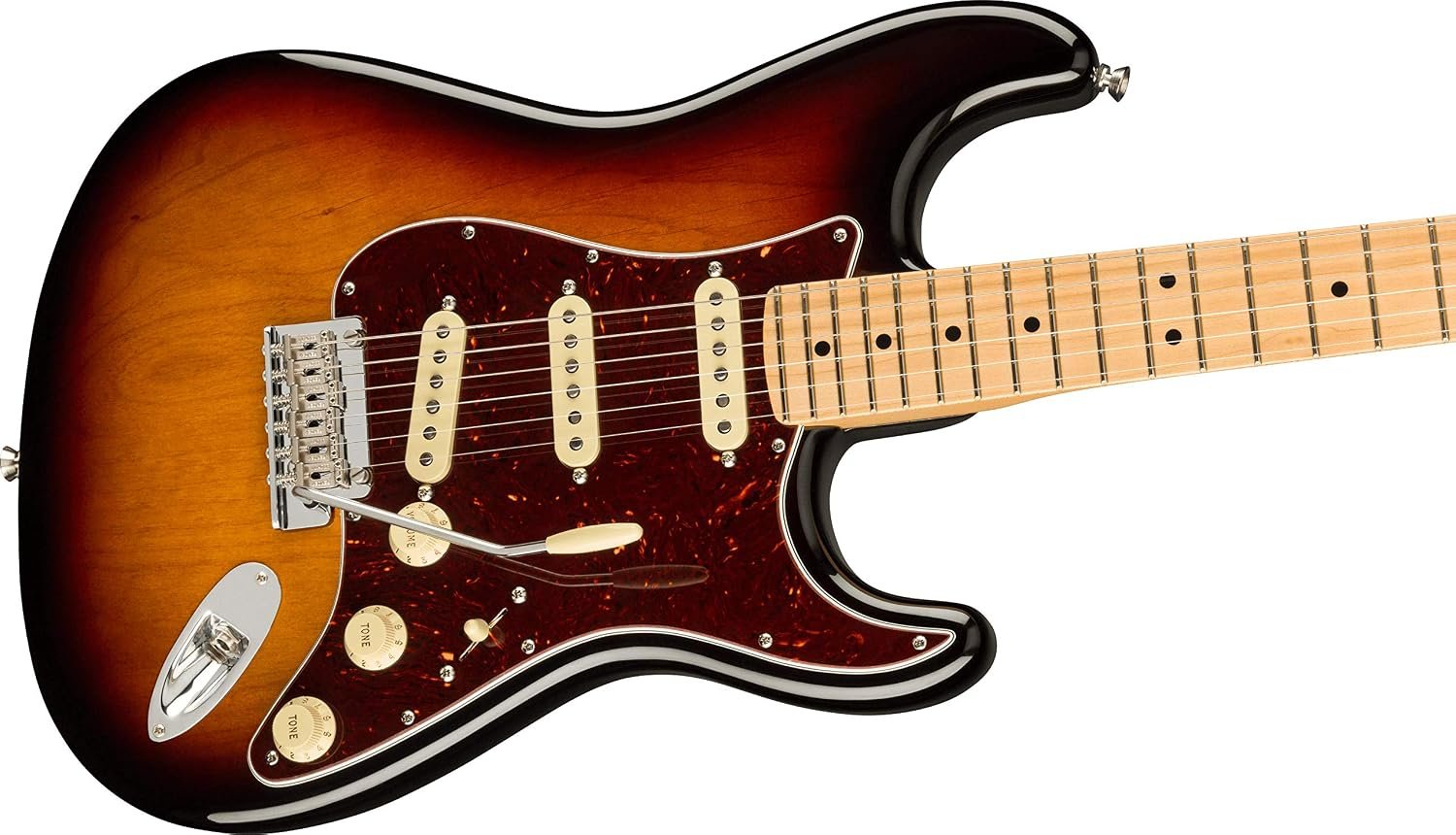
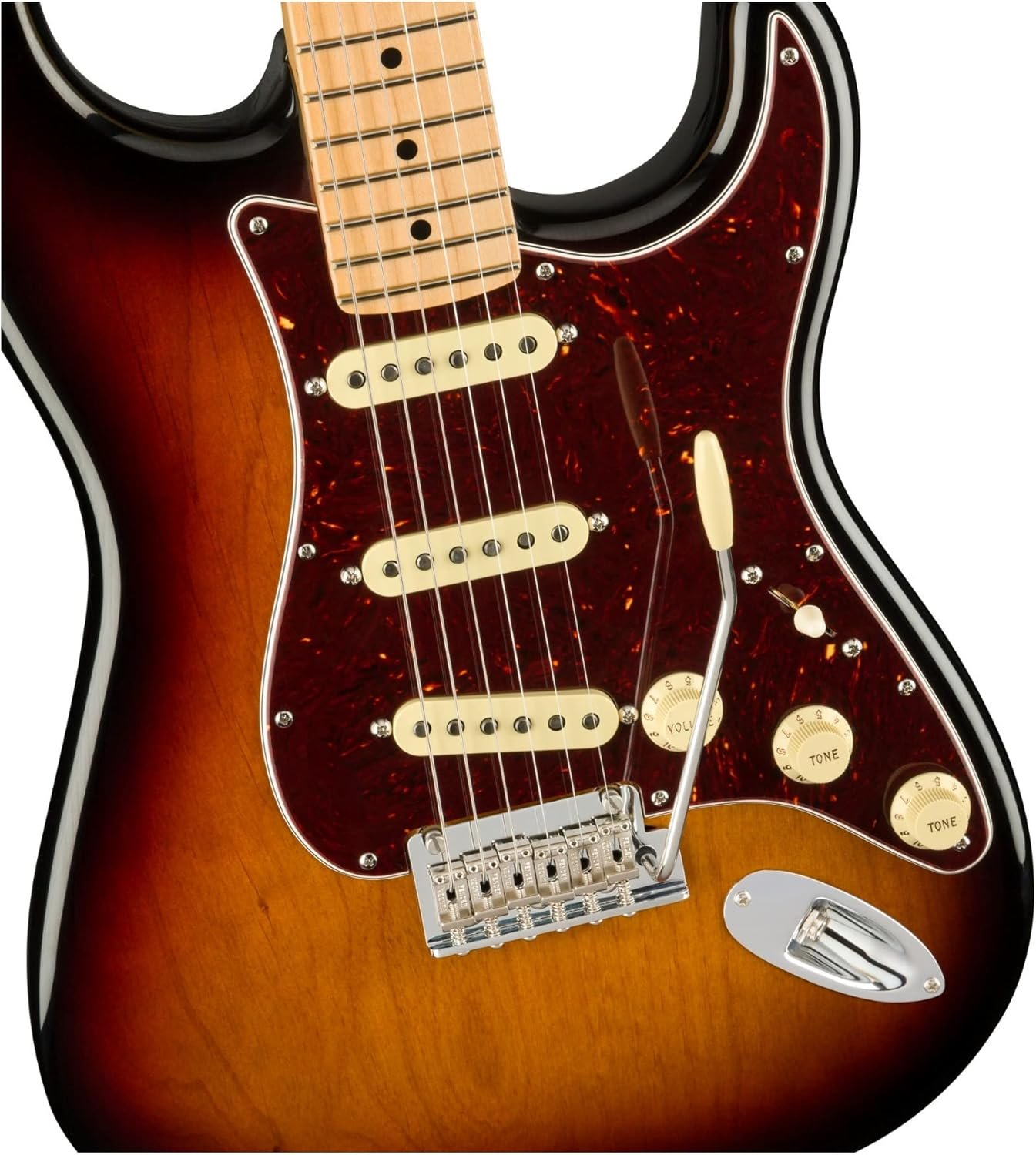
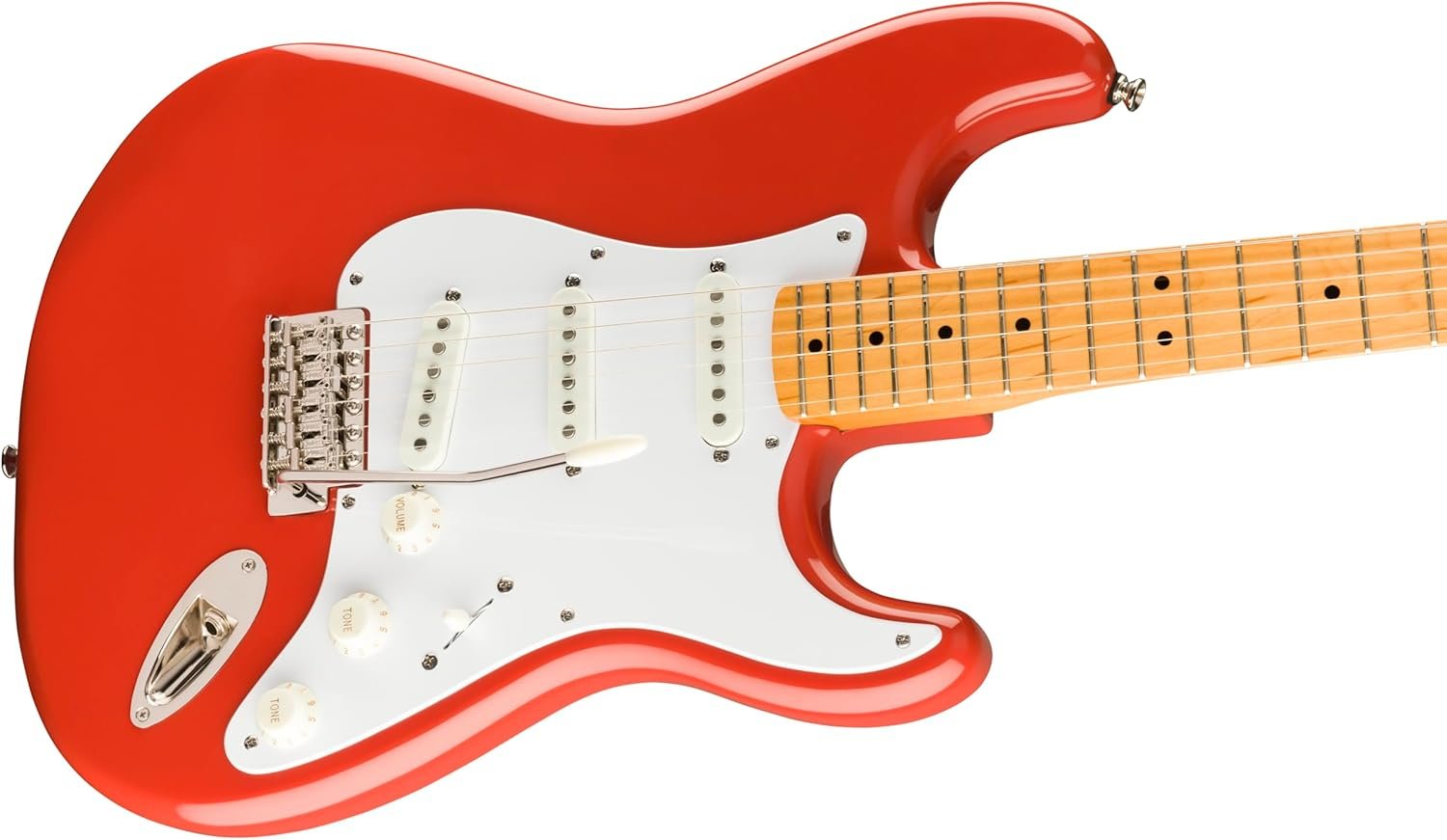
A trio of Fender-Designed alnico single-coil pickups gives this Stratocaster its tonal foundation. For a gigging guitarist, consistency matters as much as character — you want to know that the tone you dialed in during soundcheck is the tone you’ll get two hours later when the set actually starts. Single-coils have a way of responding to pick attack and dynamics in a way that rewards players who vary their touch, which makes them a natural fit for anyone building a rehearsal habit around tone shaping rather than just running through parts on autopilot.
Whether you’re working out a clean rhythm part for a verse or pushing into a brighter lead tone for a chorus, the pickup configuration gives you a starting point that can move in different directions depending on how the rest of your rig is set. That flexibility is useful in a band context, where you’re often adjusting to fit around a bassist, a second guitarist, or a vocalist rather than playing in isolation.
Tremolo Feel for Expressive Moments
The vintage-style tremolo system opens up a physical vocabulary that fixed-bridge guitars don’t offer. Subtle pitch bends, gentle vibrato, or more dramatic dives — these become part of how a phrase breathes rather than something bolted on afterward. In a rehearsal setting, this is where a part can start to feel less like notes on a page and more like a musical decision. It’s a small mechanical detail, but it changes how a solo or a sustained note sits in a mix, giving you room to add expression without reaching for a pedal.
For players who spend time refining the same handful of songs week after week, having that expressive range built into the instrument itself means fewer variables to manage. You’re not troubleshooting gear mid-rehearsal — you’re playing.
Tuning Stability When It Counts
Vintage-style tuning machines are built to hold pitch through repeated use, which matters more than it might seem during a rehearsal that runs long or a set that includes a lot of string bending. Rock-solid tuning stability paired with smooth action means less time spent re-tuning between songs and more time spent actually playing them. For a band trying to keep momentum during a run-through, that kind of reliability shapes the whole rehearsal, not just the guitar part.
The nickel-plated hardware throughout — from the tuners to the bridge components — adds to that sense of dependability. It’s hardware built to hold up under regular use rather than sit untouched, which fits the reality of an instrument that gets picked up several times a week rather than saved for special occasions.
Design That Points Backward Without Overcomplicating
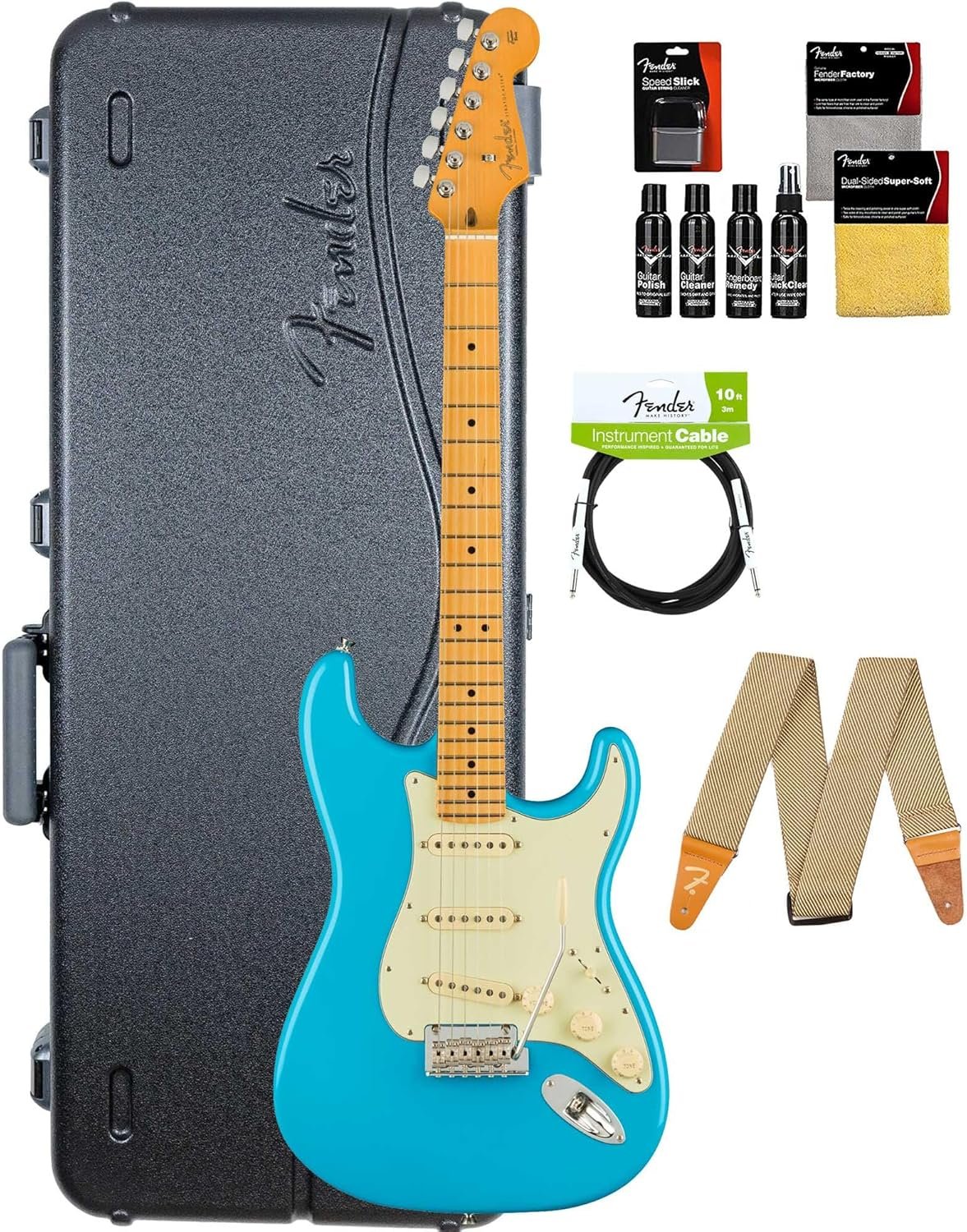
The 1950s-inspired headstock markings and vintage-tint gloss neck finish give this Stratocaster a visual identity rooted in the earliest years of the model. There’s something grounding about picking up an instrument that nods to where the design started — it can shift how you approach a part, especially if you’re working on material that leans toward classic rock, blues-based rhythm playing, or roots-influenced songwriting. The Fiesta Red finish adds a clear visual presence without asking for extra attention; it’s a color that reads well from a few feet away, whether you’re on a small stage or set up in a rehearsal space.
None of this changes how the guitar plays, but it does shape how it feels to hold. An instrument that looks like it belongs to a specific era can influence phrasing choices in subtle ways, nudging you toward certain chord voicings or picking patterns that suit the sound you’re already reaching for.
Fitting Into a Working Guitarist’s Routine
Scale length sits at 25.5 inches, keeping the string tension and feel familiar to anyone who’s spent time on standard Stratocaster-style instruments. That familiarity matters when you’re switching between guitars during a rehearsal or a set — muscle memory carries over instead of needing to be relearned. At 12.65 pounds, it’s built for extended playing sessions, whether that’s a two-hour band rehearsal or a solo practice block working through new material.
The S-S-S pickup layout, combined with the tremolo bridge and the neck profile, adds up to an instrument that doesn’t ask you to change how you play to accommodate it. Instead, it settles into whatever routine you already have — whether that’s daily practice at home, weekly rehearsals with a band, or prepping for a live set where reliability under pressure counts for a lot.
Bringing It Together
Across rehearsal rooms, home practice sessions, and live stages, the Squier Classic Vibe ’50s Stratocaster leans on a combination of vintage-inspired design and practical playability. The neck profile and fretboard radius support comfort over long sessions, the alnico pickups offer a tonal starting point with room to explore, and the tremolo system and tuning hardware add both expressive range and dependability. For guitarists who value an instrument that holds up to repetition — the kind that comes with regular rehearsal and performance — these details work together to support a routine built on consistency rather than novelty, fitting naturally into the everyday rhythm of playing.